
Backcountry Access Tracker S vs Mammut Barryvox 2
Why You Can Trust Us
- Side-by-side analysis based on real user feedback
- Unbiased comparisons, not influenced by partnerships
- Updated as new data becomes available
We may earn from affiliate links at no extra cost to you.
| Tracker S | Barryvox 2 | |
|---|---|---|
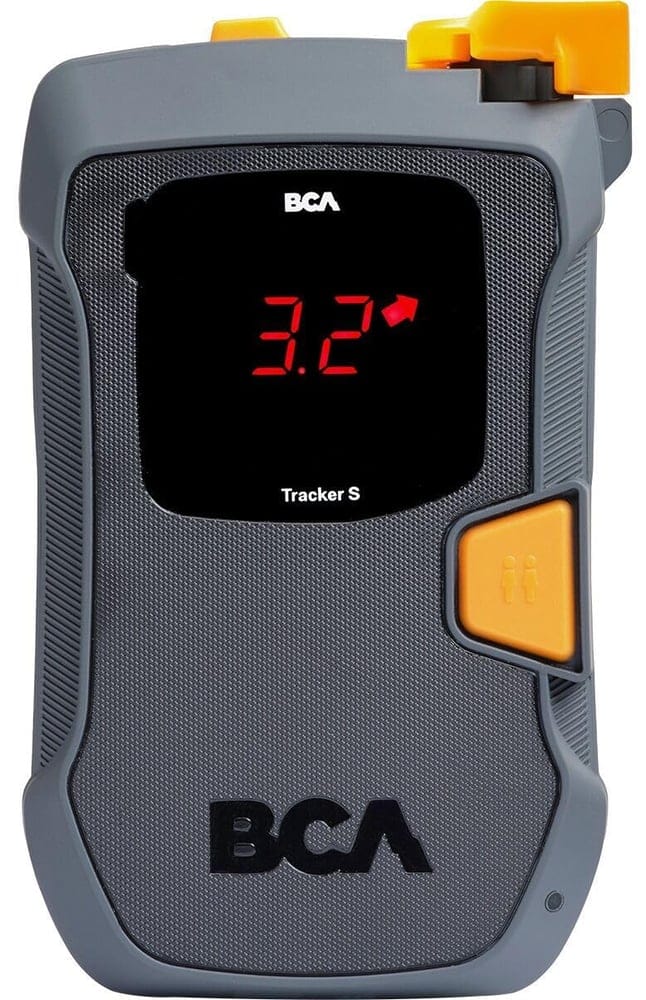 | 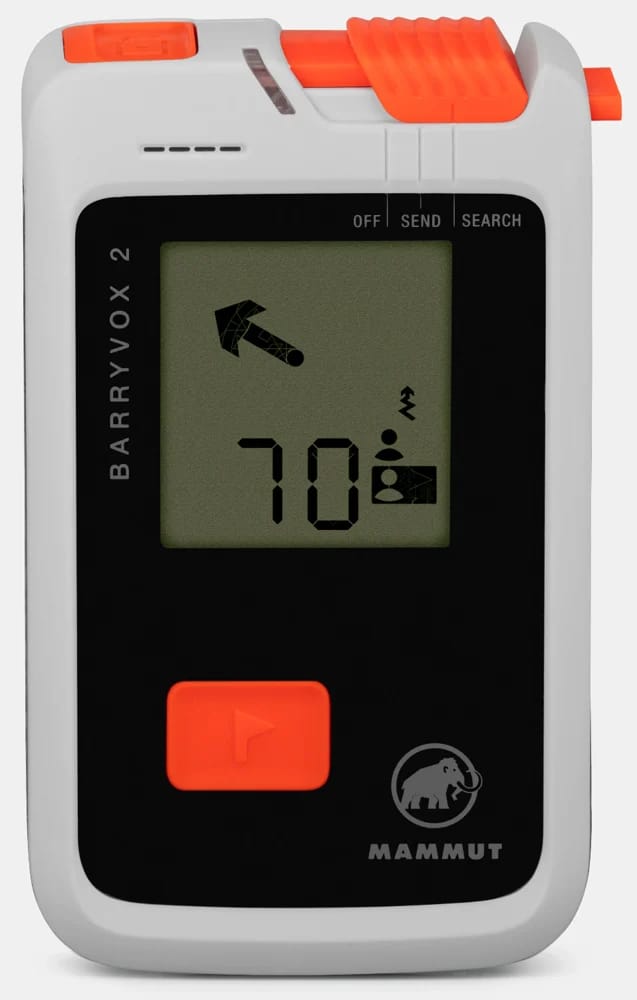 VS | |
| Antenna Count | 3 | 3 |
| Range | 164 ft (50 m max range) | 230 ft (70 m max range) |
| Multiple Burial Marking | Yes (signal suppression) | Yes |
| Weight | 5.5 oz (156 g, without harness) | 6.3 oz (180 g, with batteries) |
| Battery Life | ≈250 hr send | ≈50 hr search | ≈450 hr send (alkaline) |
| Warranty | 5 years (limited) | 2 years; 5 years with registration |
| Frequency | 457 kHz | 457 kHz |
| Auto Revert Timer | Yes | Yes, 4 min (motion sensor) |
| Battery Type | 3 × AAA alkaline | 2 × AAA alkaline |
| Bluetooth | No | Yes |
| Dimensions | 4.80 × 2.91 × 1.02 in | 4.53 × 2.68 × 0.83 in |
| Backcountry Access Tracker S | Mammut Barryvox 2 |
|---|---|
| |
| Antenna Count | |
3 | 3 |
| Range | |
164 ft (50 m max range) | 230 ft (70 m max range) |
| Multiple Burial Marking | |
Yes (signal suppression) | Yes |
| Weight | |
5.5 oz (156 g, without harness) | 6.3 oz (180 g, with batteries) |
| Battery Life | |
≈250 hr send | ≈50 hr search | ≈450 hr send (alkaline) |
| Warranty | |
5 years (limited) | 2 years; 5 years with registration |
| Frequency | |
457 kHz | 457 kHz |
| Auto Revert Timer | |
Yes | Yes, 4 min (motion sensor) |
| Battery Type | |
3 × AAA alkaline | 2 × AAA alkaline |
| Bluetooth | |
No | Yes |
| Dimensions | |
4.80 × 2.91 × 1.02 in | 4.53 × 2.68 × 0.83 in |
Accuracy
Tracker S
Barryvox 2
Accuracy matters because a beacon has to lead you to a buried victim quickly and clearly, and small differences in direction and distance readings can cost valuable minutes. Buyers find the Tracker S's directional and distance readings straightforward and say they guide you effectively toward a buried beacon. Some feedback notes that a single antenna is not as fast or precise as triple antenna models, and the Tracker S is thinner on complex multi-victim pinpointing, where some buyers prefer more feature-rich units. The Barryvox 2 shows its display of distance, direction and number of victims, and its triple antenna and audio cues support a slightly higher accuracy rating. That feedback is still limited, though, so the edge is modest. For most buyers the Barryvox 2 has a small advantage here, especially if multi-victim searches are a concern.
Durability
Tracker S
Barryvox 2
Durability matters because a beacon rides in a pack, gets knocked around on climbs and descents, and often sees cold, wet conditions. Buyers describe the Tracker S as sturdy and able to handle the bumps and knocks of backcountry travel. Feedback on the Barryvox 2 does not give enough detail to call its toughness a standout benefit or a drawback. Long-term durability information is limited for both units, so shoppers should weigh each against more established beacons. On the evidence available, the Tracker S has a small edge because buyers specifically praise its build. Buyers who prioritize a rugged-feeling unit will find more reassurance with the Tracker S.
Ease Of Use
Tracker S
Barryvox 2
Ease of use matters because a beacon is only useful if you can operate it under stress, and it is also important that new partners can learn it quickly. Buyers call the Tracker S very user-friendly and intuitive, with simple no-frills controls that suit beginners. The Barryvox 2 is praised for simple on and off operation and for being easy to teach and quick for people to start using. Its beacon check shortens the search strip, which helps with quick buddy checks. Both units earn strong positive feedback here, so neither has a clear advantage. Choose the Tracker S for its minimal control set or the Barryvox 2 if fast buddy checks matter most to your group.
Field Reliability
Tracker S
Barryvox 2
Field reliability matters because a beacon has to work when a real avalanche happens, and battery endurance affects how confident you can be on a long tour. Buyers report excellent performance and reliability overall for the Tracker S, though feedback on extended cold, wet, or long-duration trips is still limited. The Barryvox 2 earns praise for long battery life in send mode and for automatically switching to send mode after four minutes stationary. Some buyers note that running on only two batteries means less power reserve and more careful battery checks before a tour. Both products receive positive field feedback, so this category is effectively a tie. Buyers who want maximum send-mode endurance and automatic switching will lean toward the Barryvox 2.
Signal Clarity
Tracker S
Barryvox 2
Signal clarity matters because you need to read the display and hear the signal clearly when you are searching in difficult conditions. Buyers say the Tracker S display is clear and easy to read, even in bright sunlight. Some report that signal can fluctuate or spike in challenging terrain, so expect occasional inconsistency in tough conditions. The Barryvox 2 benefits from its triple antenna design, which gives a 70 m range, and buyers say its audio cues help guide them toward victims. Feedback on the Barryvox 2 is positive but limited, so the advantage is measured rather than dramatic. The Barryvox 2 is the stronger choice here, particularly if you rely on audio guidance and want more reach from the signal.
Comfort
Tracker S
Barryvox 2
Comfort matters because a beacon spends hours in a pack or on your body, and a smaller, lighter unit is easier to carry on long days. Buyers describe the Barryvox 2 as thinner and lighter than previous models, with a slimmer, smaller and lighter design. The Tracker S is also praised as compact and lightweight, and it does not feel bulky in a pack, though buyer feedback does not give enough detail to make comfort a standout benefit. Based on the evidence, the Barryvox 2 has a modest edge because its slimmer profile is specifically called out. Shoppers who prioritize a minimal pack footprint will find the Barryvox 2 slightly more appealing.
Trust & Transparency
- Data-driven rankings from real user reviews
- Affiliate partnerships don't influence our methodology
We may earn commission from links.
Conclusion & Final Verdict:
Choose the Barryvox 2 if you want the longer send-mode battery life, the 70 m range, the automatic switch to send mode, Bluetooth, and a slimmer profile, and you are comfortable managing two batteries. Confirm that your unit falls outside Mammut's 2024 voluntary recall for 2024/25-season units, or has been checked or repaired, before you head out.
Choose the Tracker S if you are newer to backcountry travel and want the simplest interface, a sturdy build, and a 5-year warranty without registration. It is a practical beginner's beacon, though it trails on range, battery endurance, and automatic send-mode switching.
Related Comparisons
Mammut Barryvox S2vsMammut Barryvox 2
The Barryvox S2 is the stronger choice for most buyers, with voice-guided searching, a glove-friendly single button, and better screen visibility in bright sun. The Barryvox 2 suits partners who mainly want a beacon that is quick to switch on, easy to teach, and simple to check at the start of a tour.
Ortovox Diract VoicevsPIEPS Pro IPS
The Ortovox Diract Voice suits buyers who want a simple, low-stress beacon with clear spoken search prompts and easy gloved operation. The PIEPS Pro IPS is the better pick for buyers who prioritize long-range lock-on and interference handling, and who are willing to learn its less intuitive button layout.
PIEPS Pro IPSvsOrtovox Focus Voice
The PIEPS Pro IPS suits buyers who want the longest battery life and strong field range, though its unclear controls and overstated distance readout count against it. The Ortovox Focus Voice is the better pick for anyone who wants spoken search guidance, simpler operation, and a lighter build.
Backcountry Access Tracker SvsBackcountry Access Tracker 3+
The Tracker S suits beginners who want the simplest possible beacon with a clear display and strong field reliability, while the Tracker 3+ is the better pick for buyers who need sharper signal handling for multi-victim searches and a motion-sensing auto revert.
Backcountry Access Tracker SvsBackcountry Access Tracker 4
The Tracker S suits beginners who want the simplest, lightest of the two with a very easy interface and clear display in bright sun. The Tracker 4 is the better choice for rough use and pocket carry, with a larger brighter screen, a countdown distance readout and motion-sensing auto revert.
Backcountry Access Tracker SvsBlack Diamond Guide BT
The Tracker S suits beginners who want a simple, light beacon with an easy interface, while the Guide BT suits searchers who want Bluetooth app settings, longer range, and lithium battery support and can accept a steeper learning curve and a heavier unit.