
Backcountry Access Tracker S vs Backcountry Access Tracker 4
Why You Can Trust Us
- Side-by-side analysis based on real user feedback
- Unbiased comparisons, not influenced by partnerships
- Updated as new data becomes available
We may earn from affiliate links at no extra cost to you.
| Tracker S | Tracker 4 | |
|---|---|---|
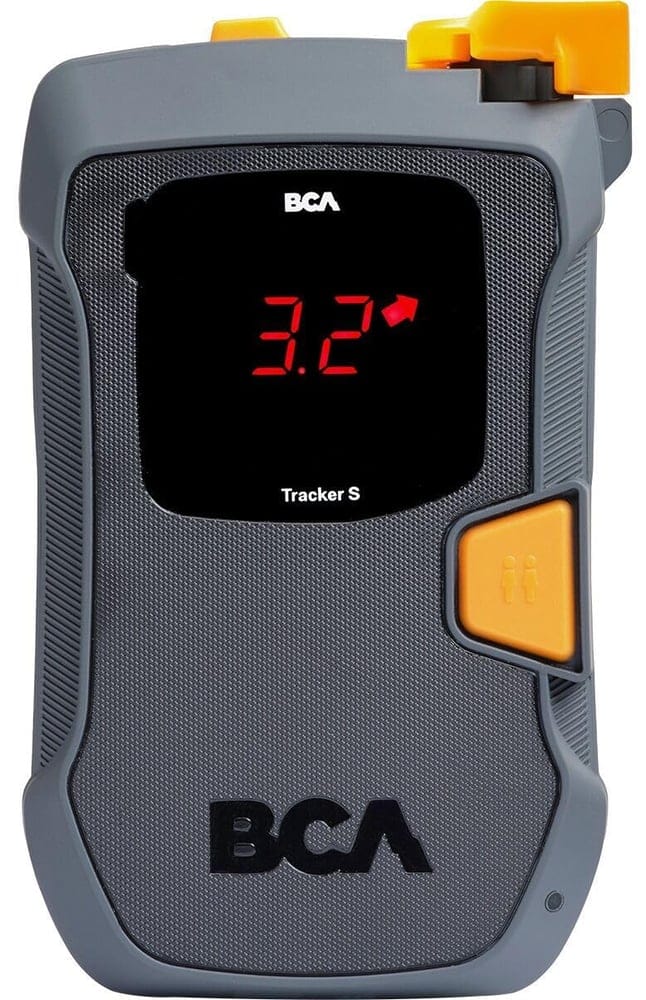 | 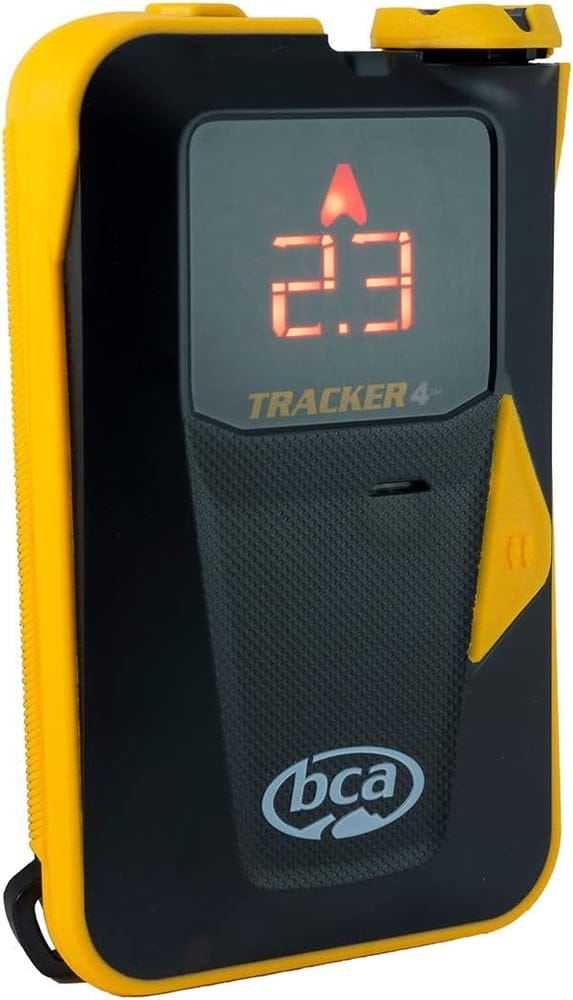 VS | |
| Antenna Count | 3 | 3 |
| Range | 164 ft (50 m max range) | 164 ft (50 m max range) |
| Multiple Burial Marking | Yes (signal suppression) | Yes (signal suppression) |
| Weight | 5.5 oz (156 g, without harness) | 6.2 oz (176 g, without harness) |
| Battery Life | ≈250 hr send | ≈50 hr search | ≈250 hr send | ≈50 hr search |
| Warranty | 5 years (limited) | 5 years (limited) |
| Frequency | 457 kHz | 457 kHz |
| Auto Revert Timer | Yes | Yes (motion-sensing) |
| Battery Type | 3 × AAA alkaline | 3 × AAA alkaline |
| Bluetooth | No | No |
| Dimensions | 4.80 × 2.91 × 1.02 in | 4.72 × 2.95 × 1.02 in |
| Backcountry Access Tracker S | Backcountry Access Tracker 4 |
|---|---|
| |
| Antenna Count | |
3 | 3 |
| Range | |
164 ft (50 m max range) | 164 ft (50 m max range) |
| Multiple Burial Marking | |
Yes (signal suppression) | Yes (signal suppression) |
| Weight | |
5.5 oz (156 g, without harness) | 6.2 oz (176 g, without harness) |
| Battery Life | |
≈250 hr send | ≈50 hr search | ≈250 hr send | ≈50 hr search |
| Warranty | |
5 years (limited) | 5 years (limited) |
| Frequency | |
457 kHz | 457 kHz |
| Auto Revert Timer | |
Yes | Yes (motion-sensing) |
| Battery Type | |
3 × AAA alkaline | 3 × AAA alkaline |
| Bluetooth | |
No | No |
| Dimensions | |
4.80 × 2.91 × 1.02 in | 4.72 × 2.95 × 1.02 in |
Accuracy
Tracker S
Tracker 4
Accuracy matters most when you are guiding a rescuer toward a buried victim and need the directional and distance readings to lead you in without confusion. Buyers of the Tracker S find its directional and distance readings straightforward, and say it guides them effectively to a buried beacon. Some feedback notes that its single antenna is not as fast or precise as triple antenna designs, and reports are thinner on complex multi-victim pinpointing, where buyers sometimes prefer more feature-rich models. The Tracker 4 gets credit for fine pinpointing, with reviewers pointing to a precise final reading down to about 0.1 before probing. That feedback is limited and mixed, so it is best treated as a neutral factor for multi-victim searches. Both products earn the same rating, so for accuracy neither has a clear edge and your choice should rest on other priorities.
Durability
Tracker S
Tracker 4
Durability matters because avalanche beacons get dropped, banged against rocks and carried through cold, wet conditions every season. Buyers describe the Tracker S as sturdy enough for the bumps and knocks of backcountry travel, but feedback on long-term wear is still thin. The Tracker 4 stands out here, with buyers repeatedly describing it as a tough workhorse beacon. Its rubberized overmold, recessed screen and robust case are cited again and again as protection for people who are hard on their gear. If you tend to abuse equipment or want a beacon that will hold up over many seasons, the Tracker 4 is the clear pick. The Tracker S is still a reasonable choice for lighter use, but it does not have the same weight of evidence behind its toughness.
Ease Of Use
Tracker S
Tracker 4
Ease of use counts for a lot when you are searching under stress and need controls that make sense immediately. The Tracker S earns some of its strongest feedback here, with buyers calling the interface very user-friendly, intuitive and free of unnecessary features. Its simple controls suit newer backcountry users who want fewer things to learn before a tour. The Tracker 4 also gets positive comments about a straightforward, user-friendly interface, and some reviewers say it feels a little snappier in use. The evidence for the Tracker 4 on this point is more limited, though, and the Tracker S has the stronger record of simplicity. For a beginner who wants the least to learn, the Tracker S is the better fit.
Field Reliability
Tracker S
Tracker 4
Field reliability determines whether a beacon keeps performing across real tours and real searches. Buyers report excellent performance and reliability overall for the Tracker S, which gives it a solid track record in the field. Feedback on extended cold, wet or long-duration trips is still limited, so that part of the picture is not fully proven. The Tracker 4 has far less reliability feedback, and what exists is split, with some uncertainty about continuing to locate multiple beacons in sequence after marking one. That matters for complex multi-burial rescues. Based on the evidence available, the Tracker S has the more dependable reputation in the field, while the Tracker 4 needs more proof before it can match it on this point.
Signal Clarity
Tracker S
Tracker 4
Signal clarity matters because you need to read the screen quickly and trust what it is telling you while moving or digging. The Tracker S display is clear and easy to read, including in bright sunlight, which buyers appreciate. Some buyers, however, report signal fluctuations or spikes in challenging terrain, so you should expect occasional inconsistency in tough conditions. The Tracker 4 has a larger, brighter display than earlier models, and its distance readout counts down toward zero as you close in on a victim. That countdown is a practical advantage when you are trying to read numbers quickly in the field. Overall feedback on signal clarity for the Tracker 4 is modest, but its screen and readout design give it the edge in this category.
Comfort
Tracker S
Tracker 4
Comfort in an avalanche beacon is about how easily it carries and how it sits in your pocket or pack over long days. The Tracker 4 is noted as one of the slimmest transceivers around, slipping easily into a pocket on long tours. That is a meaningful benefit for anyone who prefers to keep the beacon close to the body where it is quick to reach. The Tracker S is compact and lightweight, and buyers say it fits comfortably in the hand and does not feel bulky in a pack. It is also lighter on the scale, at 5.5 oz versus 6.2 oz. Buyer feedback on the Tracker S does not provide enough detail to call comfort a standout strength, so the Tracker 4 earns the win here on its slimmer carry, even though it is a little heavier.
Trust & Transparency
- Data-driven rankings from real user reviews
- Affiliate partnerships don't influence our methodology
We may earn commission from links.
Conclusion & Final Verdict:
Choose the Tracker S if you are newer to avalanche work and want the easiest interface, a lighter beacon and reliable field performance. Its straightforward controls and strong field reputation make it a sensible first transceiver.
Choose the Tracker 4 if you are hard on your gear, carry your beacon in a pocket on long tours or want a larger, brighter display with a countdown distance readout. Its durability evidence and motion-sensing auto revert make it the stronger choice for experienced users who expect heavy use.
For most buyers who prioritize toughness and a clearer display, the Tracker 4 is the better overall pick. For beginners who value simplicity and weight savings, the Tracker S is the wiser buy.
Related Comparisons
Backcountry Access Tracker 4vsBlack Diamond Guide BT
The Tracker 4 is the better pick for rough-use buyers who want a slim, rugged transceiver with a brighter countdown display and a longer limited warranty. The Guide BT suits searchers who value app-based settings, Bluetooth updates, directional guidance, and longer maximum range, and who will confirm recall status before buying used.
Backcountry Access Tracker 4vsMammut Barryvox 2
Tracker 4 is the better choice for buyers who are hard on their gear, thanks to its rubberized overmold, recessed screen and slim pocket-friendly body. Barryvox 2 suits teams that want quick, simple operation, longer send-mode battery life and a 70 m range, so pick it if you train new partners often.
Backcountry Access Tracker 4vsMammut Barryvox S2
The Barryvox S2 is the better all-round choice for most searchers, with guided voice operation, a clearer screen, stronger field reliability, and a smaller body, though its durability is less proven. The Tracker 4 suits buyers who abuse their gear and want a rugged, slim beacon with a 5-year limited warranty.
Backcountry Access Tracker 4vsOrtovox Diract Voice
The Tracker 4 is the better choice for rough handling and a slim pocket carry, while the Diract Voice stands out for simple one-hand operation and voice-guided searching. Pick the Tracker 4 if gear abuse is your main concern and the Diract Voice if you want the easiest beacon to use under stress.
Backcountry Access Tracker 4vsOrtovox Focus Voice
The Backcountry Access Tracker 4 is the better pick for rough-use backcountry skiers who want a tough, slim beacon with simple controls. The Ortovox Focus Voice suits searchers who want spoken guidance, stronger burial-position range, and a smaller, rechargeable body.
Backcountry Access Tracker 4vsPIEPS Pro IPS
The Tracker 4 suits backcountry users who are hard on their gear, with a rubberized overmold, slim pocket-friendly body and simpler controls. The Pro IPS suits those who prioritize field range, lock-on reliability and long battery life, provided they accept a less intuitive button layout.