
Backcountry Access Tracker S vs Ortovox Focus Voice
Why You Can Trust Us
- Side-by-side analysis based on real user feedback
- Unbiased comparisons, not influenced by partnerships
- Updated as new data becomes available
We may earn from affiliate links at no extra cost to you.
| Tracker S | Focus Voice | |
|---|---|---|
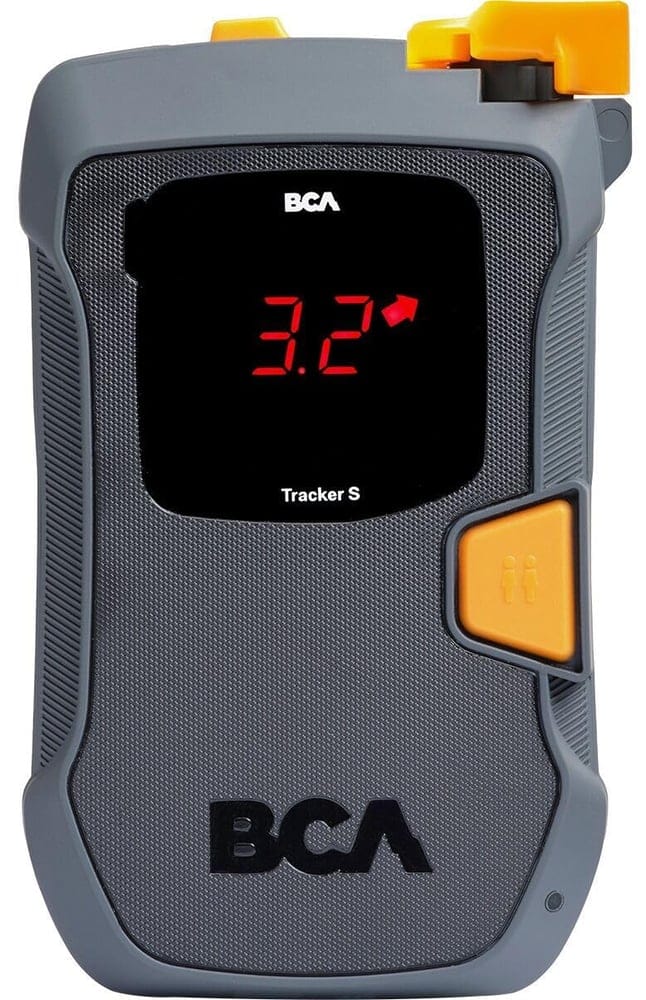 | 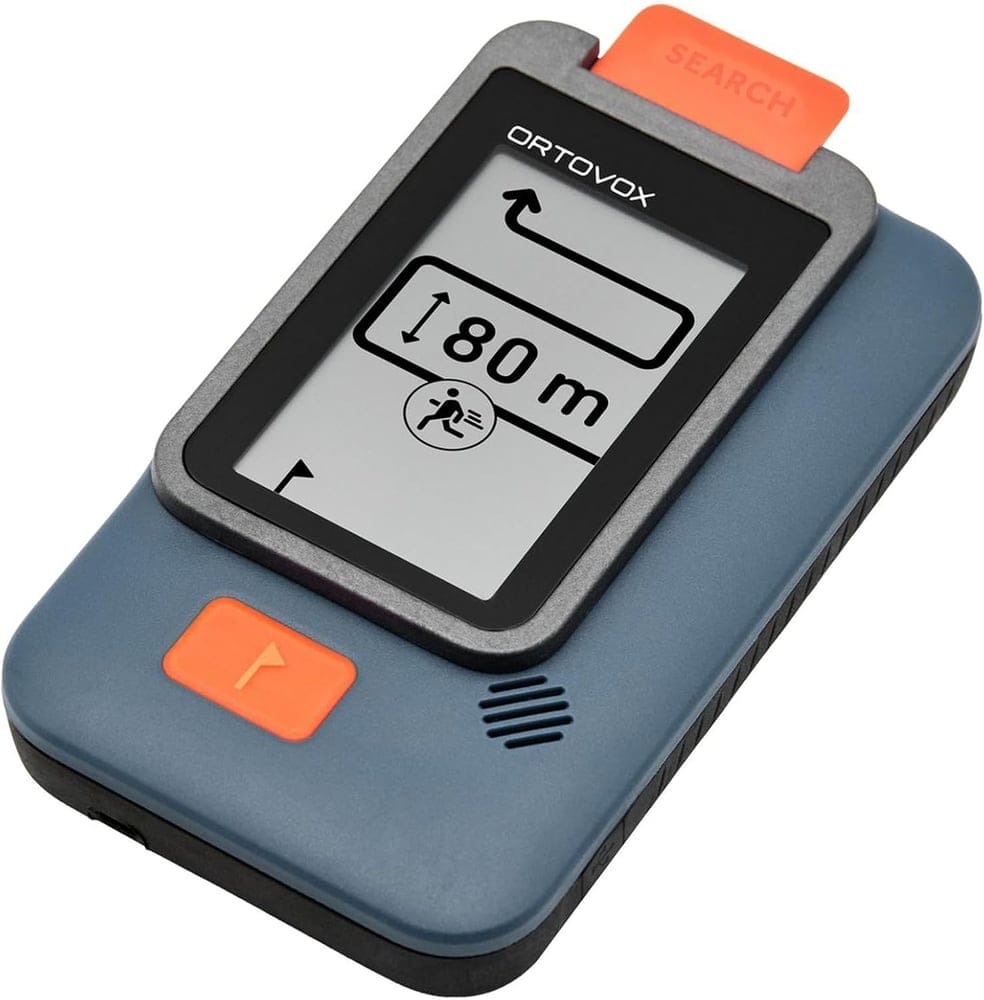 VS | |
| Antenna Count | 3 | 3 |
| Range | 164 ft (50 m max range) | 262 ft (80 m search strip width, ICAR) |
| Multiple Burial Marking | Yes (signal suppression) | Yes (up to 4 victims) |
| Weight | 5.5 oz (156 g, without harness) | 6.5 oz (185 g) |
| Battery Life | ≈250 hr send | ≈50 hr search | ≈200 hr send |
| Warranty | 5 years (limited) | 5 years with app registration |
| Frequency | 457 kHz | 457 kHz |
| Auto Revert Timer | Yes | Yes, 2 min |
| Battery Type | 3 × AAA alkaline | Built-in rechargeable Li-ion (USB-C) |
| Bluetooth | No | Yes |
| Dimensions | 4.80 × 2.91 × 1.02 in | 4.72 × 2.76 × 0.91 in |
| Backcountry Access Tracker S | Ortovox Focus Voice |
|---|---|
| |
| Antenna Count | |
3 | 3 |
| Range | |
164 ft (50 m max range) | 262 ft (80 m search strip width, ICAR) |
| Multiple Burial Marking | |
Yes (signal suppression) | Yes (up to 4 victims) |
| Weight | |
5.5 oz (156 g, without harness) | 6.5 oz (185 g) |
| Battery Life | |
≈250 hr send | ≈50 hr search | ≈200 hr send |
| Warranty | |
5 years (limited) | 5 years with app registration |
| Frequency | |
457 kHz | 457 kHz |
| Auto Revert Timer | |
Yes | Yes, 2 min |
| Battery Type | |
3 × AAA alkaline | Built-in rechargeable Li-ion (USB-C) |
| Bluetooth | |
No | Yes |
| Dimensions | |
4.80 × 2.91 × 1.02 in | 4.72 × 2.76 × 0.91 in |
Accuracy
Tracker S
Focus Voice
Accuracy matters because a beacon is only useful if it guides you to the buried victim quickly and tells you when you have reached the smallest distance before probing. The Tracker S earns praise for directional and distance readings that feel straightforward and lead you toward a buried beacon effectively. Some buyers, however, note that its single-antenna design is not as fast or precise as multi-antenna models, and feedback on complex multi-victim pinpointing is thinner, with some users preferring more feature-rich beacons for that scenario. The Focus Voice gets consistently positive comments on pinpointing the smallest distance before probing, which is the step where many searches slow down. Feedback is still limited, so the evidence is encouraging rather than conclusive. For a buyer who expects to run complicated multi-victim searches, the Focus Voice is the safer pick, while a solo beginner on simple searches will find the Tracker S adequate.
Durability
Tracker S
Focus Voice
Durability matters because a beacon spends much of its life in a pack, getting knocked around on rock, snow, and vehicle floors, and sometimes soaked. Buyers describe the Tracker S as sturdy enough to handle the bumps and knocks of backcountry travel. Long-term feedback is limited, so it is hard to judge how it will hold up over many seasons. The Focus Voice receives positive comments that focus on its waterproof design, which matters when wet snow and sudden weather changes are common. Its durability feedback is also still limited, but the recurring praise is specific to moisture protection. Neither beacon has a strong track record yet, so buyers who value a long history should weigh both against more established models. On the evidence available, the Focus Voice has a slight edge because its positive durability comments are tied to a clear protective feature.
Ease Of Use
Tracker S
Focus Voice
Ease of use matters most when you are digging, stressed, and trying to remember the search sequence. The Tracker S is one of its strongest points, with buyers calling the interface very user-friendly, intuitive, and simple, with no bells and whistles to learn. That makes it a sensible first beacon for newer users who want fewer things to master before a tour. The Focus Voice takes a different route, using voice navigation in nine languages and step-by-step spoken prompts through each search stage. Buyers say this reduces the time spent decoding a screen and keeps the operation simple with a one-button interface. Because the voice, display, and acoustic guidance work together through each phase, the Focus Voice feels more guided than the Tracker S. Both are easy to learn, but the Focus Voice is easier to follow under pressure, and the Tracker S is the better choice only if you prefer a purely visual, minimal interface.
Field Reliability
Tracker S
Focus Voice
Field reliability matters because the beacon has to work in real avalanche conditions, not just in a showroom. Buyers report excellent performance and reliability overall for the Tracker S, although feedback on extended cold, wet, or long-duration trips is still limited. The Focus Voice shows a stronger and more detailed picture, with buyers highlighting its antenna selection, which can provide up to twice the transmitting range when a victim is in an unfavorable burial position. Its automatic switch back to transmit after two minutes without movement adds secondary avalanche protection, and buyers also mention interference protection and permanent self-testing. The product is also described with an effective range of up to 70 metres in field tests. Because the Focus Voice offers more concrete reliability features with consistent praise, it is the more persuasive choice for buyers who prioritize dependable performance in difficult burials.
Signal Clarity
Tracker S
Focus Voice
Signal clarity matters because unclear readings in the final metres can cost precious time and cause the searcher to overshoot or hesitate. The Tracker S display is praised as clear and easy to read, even in bright sunlight, which is a real advantage on snowy days. However, some buyers report signal fluctuations or spiking in challenging terrain, so expect occasional inconsistency in tough conditions. The Focus Voice is described with a high-readability display and clear, instant prompts, and buyers single out its 180-degree correction, which indicates when to change direction. This turns a potentially confusing signal into a clear instruction. The Focus Voice therefore has the stronger signal clarity record, while the Tracker S remains readable in sunlight but may be less steady in rough terrain.
Comfort
Tracker S
Focus Voice
Comfort matters because a beacon worn under a jacket for hours on a tour can become a nuisance if it is heavy or awkward to carry. The Tracker S is light at 156 g without a harness and fits comfortably in the hand, and its compact body does not feel bulky in a pack. Buyers gave too little detail to call its comfort a standout benefit or a drawback, so it lands at a measured middle score. The Focus Voice weighs 185 g and is described with a practical chest harness that buyers find sensible for carrying it. Its comfort feedback is encouraging but still limited. The Tracker S is the lighter option, which can matter on long days. The Focus Voice, however, has more positive comfort comments tied to its harness, so buyers who want a secure, practical carry may find it the better fit.
Trust & Transparency
- Data-driven rankings from real user reviews
- Affiliate partnerships don't influence our methodology
We may earn commission from links.
Conclusion & Final Verdict:
Choose the Focus Voice if you want the stronger overall performer, with spoken search guidance, the antenna selection feature for difficult burials, the 180-degree direction correction, and the most consistent praise for field reliability and signal clarity. It is also the better choice for buyers who want Bluetooth and a rechargeable battery.
Choose the Tracker S if you are a newer backcountry user who wants the simplest interface, the lightest carry at 156 g, and a beacon that works reliably for straightforward searches. Expect occasional signal fluctuation in rough terrain and less detailed feedback on complex multi-victim situations.
Related Comparisons
Backcountry Access Tracker SvsBackcountry Access Tracker 3+
The Tracker S suits beginners who want the simplest possible beacon with a clear display and strong field reliability, while the Tracker 3+ is the better pick for buyers who need sharper signal handling for multi-victim searches and a motion-sensing auto revert.
Backcountry Access Tracker SvsBackcountry Access Tracker 4
The Tracker S suits beginners who want the simplest, lightest of the two with a very easy interface and clear display in bright sun. The Tracker 4 is the better choice for rough use and pocket carry, with a larger brighter screen, a countdown distance readout and motion-sensing auto revert.
Backcountry Access Tracker SvsBlack Diamond Guide BT
The Tracker S suits beginners who want a simple, light beacon with an easy interface, while the Guide BT suits searchers who want Bluetooth app settings, longer range, and lithium battery support and can accept a steeper learning curve and a heavier unit.
Backcountry Access Tracker SvsMammut Barryvox 2
The Barryvox 2 is the better pick for buyers who want longer send-mode battery life, a 70 m range, Bluetooth, and an automatic send-mode switch, while the Tracker S suits beginners who value a simpler, lighter, more durable-feeling unit with a 5-year warranty.
Backcountry Access Tracker SvsMammut Barryvox S2
The Barryvox S2 is the stronger all-round transceiver, with clearer guidance, Bluetooth settings, longer range, and better signal clarity. The Tracker S suits beginners who want a simpler, lighter beacon with fewer features to learn.
Backcountry Access Tracker SvsOrtovox Diract Voice
The Tracker S suits beginners who want the simplest possible beacon in a light, compact package. The Ortovox Diract Voice is the better pick for searchers who want spoken direction prompts and a more comfortable carry, though it needs careful cross-checking in multi-victim searches.