
Smith I/O MAG vs Oakley Flight Deck
Why You Can Trust Us
- Side-by-side analysis based on real user feedback
- Unbiased comparisons, not influenced by partnerships
- Updated as new data becomes available
We may earn from affiliate links at no extra cost to you.
| I/O MAG | Flight Deck | |
|---|---|---|
 |  VS | |
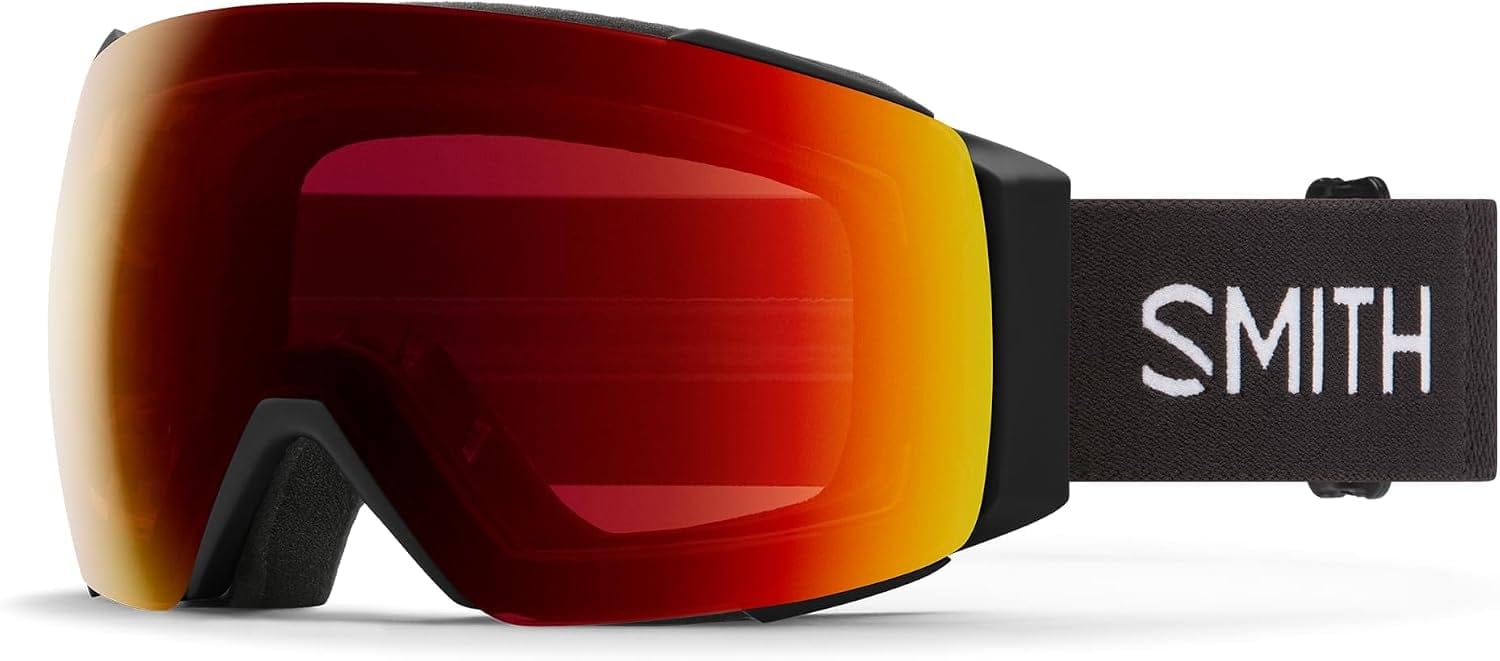
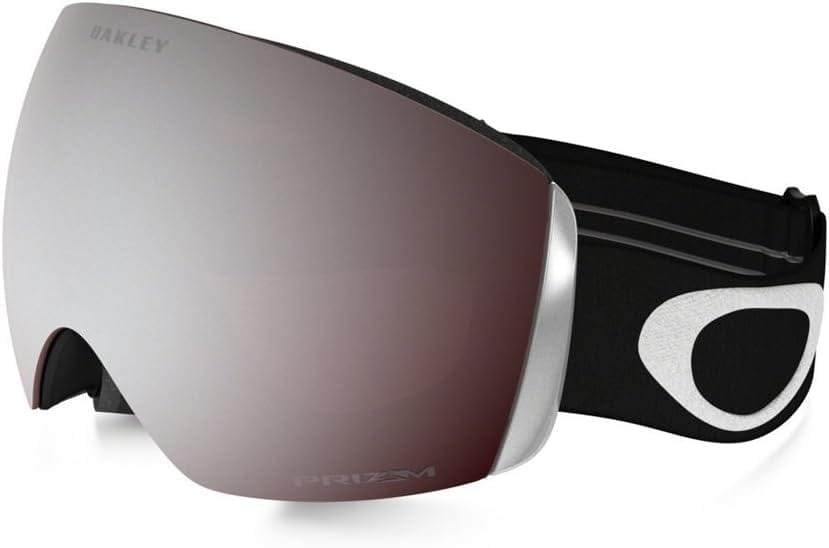
| Lens Type | Spherical | Spherical, dual-pane (rimless) |
| Lens Change System | MAG magnetic lens change system | Ridgelock lens change system |
| Included Lenses | 2: ChromaPop bright-light lens (installed) + ChromaPop low-light bonus lens; VLT varies by colorway | 1 Prizm lens (e.g., Prizm Snow Black Iridium 5.5% VLT); VLT varies by colorway |
| Size | Medium fit; Low Bridge Fit available | L (large fit); M version available |
| OTG Compatibility | Not OTG-rated (Smith sells separate OTG models) | Yes (frame notches fit most prescription eyewear) |
| Lens Technology | ChromaPop | Prizm Snow |
| Warranty | Limited lifetime (manufacturer defects) | 2 years |
| Anti-fog Coating | 5X anti-fog inner lens | Yes (F3 anti-fog coating) |
| Ventilation | AirEvac ventilation (integrates with Smith helmets) | N/A |
| Helmet Compatibility | Designed for Smith helmet integration | Yes (rimless frame fits most helmets) |
| Foam Layers | 3 (DriWix face foam) | 3 |
| Case Included | No hard case (microfiber bag with lens sleeve) | No hard case (microbag) |
| Smith I/O MAG | Oakley Flight Deck |
|---|---|
| |
| Lens Type | |
Spherical | Spherical, dual-pane (rimless) |
| Lens Change System | |
MAG magnetic lens change system | Ridgelock lens change system |
| Included Lenses | |
2: ChromaPop bright-light lens (installed) + ChromaPop low-light bonus lens; VLT varies by colorway | 1 Prizm lens (e.g., Prizm Snow Black Iridium 5.5% VLT); VLT varies by colorway |
| Size | |
Medium fit; Low Bridge Fit available | L (large fit); M version available |
| OTG Compatibility | |
Not OTG-rated (Smith sells separate OTG models) | Yes (frame notches fit most prescription eyewear) |
| Lens Technology | |
ChromaPop | Prizm Snow |
| Warranty | |
Limited lifetime (manufacturer defects) | 2 years |
| Anti-fog Coating | |
5X anti-fog inner lens | Yes (F3 anti-fog coating) |
| Ventilation | |
AirEvac ventilation (integrates with Smith helmets) | N/A |
| Helmet Compatibility | |
Designed for Smith helmet integration | Yes (rimless frame fits most helmets) |
| Foam Layers | |
3 (DriWix face foam) | 3 |
| Case Included | |
No hard case (microfiber bag with lens sleeve) | No hard case (microbag) |
Comfort & Fit
I/O MAG
Flight Deck
Comfort determines whether goggles stay on comfortably through a full day, especially when they need to sit over a helmet and under a beanie. Both goggles earn a strong 4.6 out of 5 here, so neither has a clear overall edge. The I/O MAG is praised for its triple-layer face foam, silicone-lined strap that stays put on a helmet, and interior padding that feels plush. Buyers also point to its size options, with the XL fitting better for many people. The main caveat is that the fit varies with head size, and smaller or narrower faces may find it snug or less secure. The Flight Deck gets consistent praise for its 50mm adjustable straps, silicone grip lining, and triple-layer foam that holds steady without pressure points over long days. Many shoppers say it sits well under a helmet, though a few find it is not the most comfortable option for every face shape. If you have a smaller or narrower face, the Flight Deck may be the more forgiving choice, while the I/O MAG suits those who want an XL option.
Durability
I/O MAG
Flight Deck
Durability matters because goggles are often bumped, dropped, and tossed in a pack, and they need to last across many seasons. The I/O MAG earns a 3.9 out of 5 for durability, with owners saying it still holds up well after years of regular use. Reviews focus more on long-term wear than on impact or cold-weather testing, so its strength is solid but not heavily documented. The Flight Deck scores 2.8 out of 5, and this is its clearest weakness. Some buyers report scratches out of the box, lens problems in the first season, and a travel case that is not especially sturdy. The Flight Deck can still work well as a protective pick for careful use, but buyers should factor in case quality and check the lens closely. For skiers who want goggles that will last several seasons with less worry, the I/O MAG is the stronger choice.
Optical Clarity
I/O MAG
Flight Deck
Optical clarity affects how well you read terrain, spot ice, and judge contrast, so it is one of the most important factors in a goggle. The I/O MAG scores 4.4 out of 5 here, with buyers praising its spherical lens and ChromaPop coating for sharp detail, strong color contrast, and good visibility in low light. Some owners note that peripheral vision is narrower on one version, so the specific model matters if side view is a priority. The Flight Deck scores 4.1 out of 5 and is well regarded for crisp, high-definition vision in flat light, bright sun, and cloudy or whiteout conditions. Its large rimless spherical design gives a wide field of view that many skiers value. Some buyers say clarity varies a bit between models. Overall, the I/O MAG has the edge for contrast and low-light performance, while the Flight Deck is a strong choice if you prioritize a wide, open view.
Fog Control
I/O MAG
Flight Deck
Fog control matters most on storm days, in humid snow, and during temperature swings, when goggles can quickly steam up and make skiing unsafe. The Flight Deck scores 4.4 out of 5 here and earns praise for its dual-pane lens with anti-fog coating, vents that move air across the lens, and extra nose-bridge foam that seals gaps. Buyers describe it as one of the harder-to-fog goggles they have tested. The I/O MAG is also strong at 4.2 out of 5, with its anti-fog treatment and AirEvac venting praised for clear viewing on stormy days and in changing temperatures. Owners say they rarely need to wipe the lens. The difference between the two is small, but the Flight Deck has the slight edge for skiers who ski in wet or very cold conditions. The I/O MAG remains an excellent option for people who want fog-resistant goggles without frequent wiping.
Lens Changing
I/O MAG
Flight Deck
Lens changing matters if you ski through bright sun, flat light, and storms in the same week, because swapping lenses quickly keeps your goggles usable. The I/O MAG scores 4.2 out of 5 here, with its magnetic MAG system praised for making lens swaps quick and easy. Buyers like that magnets guide the shield back into place and that a lens pops back on easily. Two lenses are included for bright and low light, which is a big draw for shoppers who want goggles that adapt. Some owners find the swap harder on one model, so comparing versions is worthwhile. The Flight Deck scores 3.3 out of 5. It uses Oakley's Ridgelock system, which buyers describe as quick and easy to swap, but some feel the older system works better and that the two systems are nearly identical. The I/O MAG is the clear choice for frequent lens swapping.
Style
I/O MAG
Flight Deck
Style is a personal factor, but it still shapes what you reach for every morning on the hill. The Flight Deck earns a strong 4.7 out of 5 here, with buyers praising its spherical bubble shape, rimless frame, wide straps, and blacked-out stealthy colorway. It appeals to skiers who want goggles that look as good on the mountain as they perform. The I/O MAG scores 3.9 out of 5 and comes in a broad range of colorways, from bold high-tech looks to a more traditional Royal Navy style. That variety suits buyers with different tastes, though those who prefer a very understated or classic frame should check the color options carefully. For most shoppers who care about appearance, the Flight Deck has the stronger look, while the I/O MAG offers more colorway choice.
Trust & Transparency
- Data-driven rankings from real user reviews
- Affiliate partnerships don't influence our methodology
We may earn commission from links.
Conclusion & Final Verdict:
Choose the I/O MAG if you change conditions often, want two lenses in the box, value a longer warranty, and need clear low-light optics with reliable venting. It is also a good pick if you want goggles that last several seasons with less worry. Fit depends on head size, so try the XL or low bridge option if you have a larger or narrower face.
Choose the Flight Deck if you want the strongest fog control, a wide and stylish look, OTG compatibility for prescription glasses, or a comfortable fit with a silicone grip that stays put over a helmet. Plan to protect it carefully, since buyers report scratches and a weaker case.
Related Comparisons
Smith I/O MAGvsAnon M5
The Smith I/O MAG is the better pick for variable weather, with a spherical ChromaPop lens, strong fog control, and a lifetime warranty. The Anon M5 suits skiers who want a sleeker rimless look and distortion-free peripheral vision.
Smith I/O MAGvsGiro Axis
The Smith I/O MAG is the more versatile pick, with stronger fog control, a magnetic lens swap that suits shifting weather, and a secure, plush fit for most skiers. The Giro Axis suits buyers who want a wide frameless view, a low-profile helmet fit, and a distinctive look, but it trails on fog control and durability.
Smith I/O MAGvsGiro Contour
The Smith I/O MAG is the stronger choice for skiers facing changing weather, with better fog control and quicker magnetic lens swaps. The Giro Contour suits riders who put comfort and crisp, wide-view optics first and can accept more fogging in wet or high-effort conditions.
Smith I/O MAGvsGlade Optics Adapt 2
The Smith I/O MAG is the more versatile pick, with spherical ChromaPop optics, a magnetic two-lens swap, and stronger fog control for skiers facing changing weather. The Glade Optics Adapt 2 suits buyers who want a flatter cylindrical fit, a photochromic lens that adjusts on its own, and OTG compatibility for wearing over glasses.
Smith I/O MAGvsOakley Flow Scape
The Smith I/O MAG is the better pick for skiers who change lenses often across shifting weather, thanks to its easy magnetic swap and comfortable fit on a helmet. The Oakley Flow Scape suits skiers who put optics first, with a wider, sharper view of snow texture and a stronger case included.
Smith I/O MAGvsOakley Line Miner
The I/O MAG is the better pick for skiers whose conditions change often, thanks to its quick magnetic lens swap, included bonus lens, and AirEvac venting. The Line Miner suits glasses wearers and style-focused buyers who want wider peripheral vision and a classic cylindrical look, and who will rarely change lenses.