
How to Choose a Backpacking Tent for Rain and Wind
Evaluate backpacking tents for rain and wind by fly and floor coverage, structure, seams, ventilation, guylines, stakes, site, and pitch quality.
Draft status: Step 9 completed on 2026-07-21. This is article prose only, not the final structured blog object. It contains no universal wind-speed, stormproof, or leakproof claim.
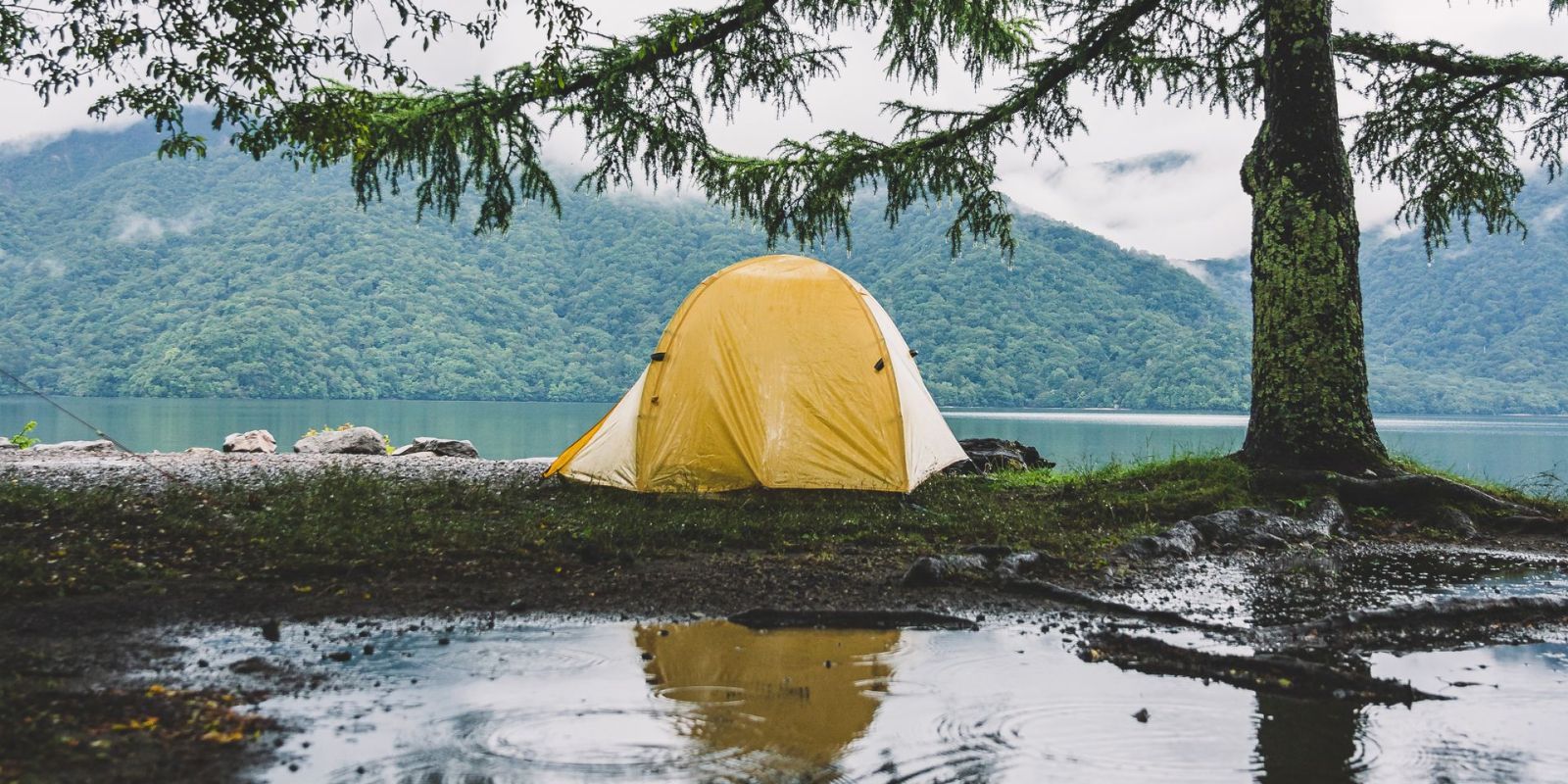
Choose a backpacking tent for rain and wind as a complete system: full fly and floor coverage, protected openings, sound seams, a structure suited to expected conditions, usable guyout points, appropriate stakes, controllable ventilation, and a pitch you can execute well. Waterproof ratings and fabric denier help compare materials, but neither number proves whole-tent weather performance.
Weather resistance comes from the tent, campsite, and user working together. A strong shelter can perform poorly when loosely pitched in an exposed drainage channel, while a modest shelter can benefit from protected terrain and correct tension. Severe forecasts can exceed any 3-season shelter; route changes remain part of the decision.
Rain Resistance and Wind Resistance Are Different
| Feature | Helps in rain | Helps in wind | Limitation |
|---|---|---|---|
| Full-coverage fly | Yes | Sometimes | Coverage does not prove seam, door, or pitch quality |
| Bathtub floor | Yes | No direct benefit | Height and seams still matter; site can pool water |
| Protected vents/doors | Yes | Sometimes | Openings must balance airflow and wind-driven rain |
| Pole/trekking-pole structure | Indirectly | Yes | Geometry and support matter more than pole material alone |
| Guyout points | Helps maintain separation | Yes | Need correct lines, anchors, direction, and tension |
| Stakes | Holds pitch | Yes | Performance changes with soil and placement |
| Hydrostatic-head rating | Describes fabric pressure resistance | No direct proof | Not a whole-tent test |
| Denier | Describes yarn mass category | No direct proof | Does not alone establish durability or storm performance |
What Tent Features Matter for Rain?
Look at how water moves across the complete shelter.
- Fly coverage around the inner and doors.
- Vestibule shape and whether entry exposes the sleeping area.
- Floor shape, height, seams, and abrasion protection.
- Seam construction and current sealing requirements.
- Vent placement and whether airflow can remain open in rain.
- Separation between wet fly and inner tent.
- Fabric behavior when wet and the ability to re-tension.
SlingFin's hydrostatic-head explanation describes the rating as water pressure required to force water through fabric. It is useful material data, but it does not test doors, seams, floor abrasion, coatings over time, or a loose pitch.
What Tent Features Matter for Wind?
Wind loads the shape and anchors of the shelter. Evaluate:
- Pole or trekking-pole geometry and supported panels.
- The strongest intended orientation to prevailing wind.
- Guyout points connected to structural areas.
- Stakes suited to expected soil, sand, or snow.
- Low, taut panels that do not flap excessively.
- Secure fly attachments and complete weather configuration.
- A footprint and height appropriate to exposure.
Do not convert these features into an unsupported wind-speed guarantee. Gusts, direction changes, saturated soil, damaged trees, and user setup create conditions a product page cannot reduce to one safe number.
Freestanding vs Trekking-Pole Tents in Weather
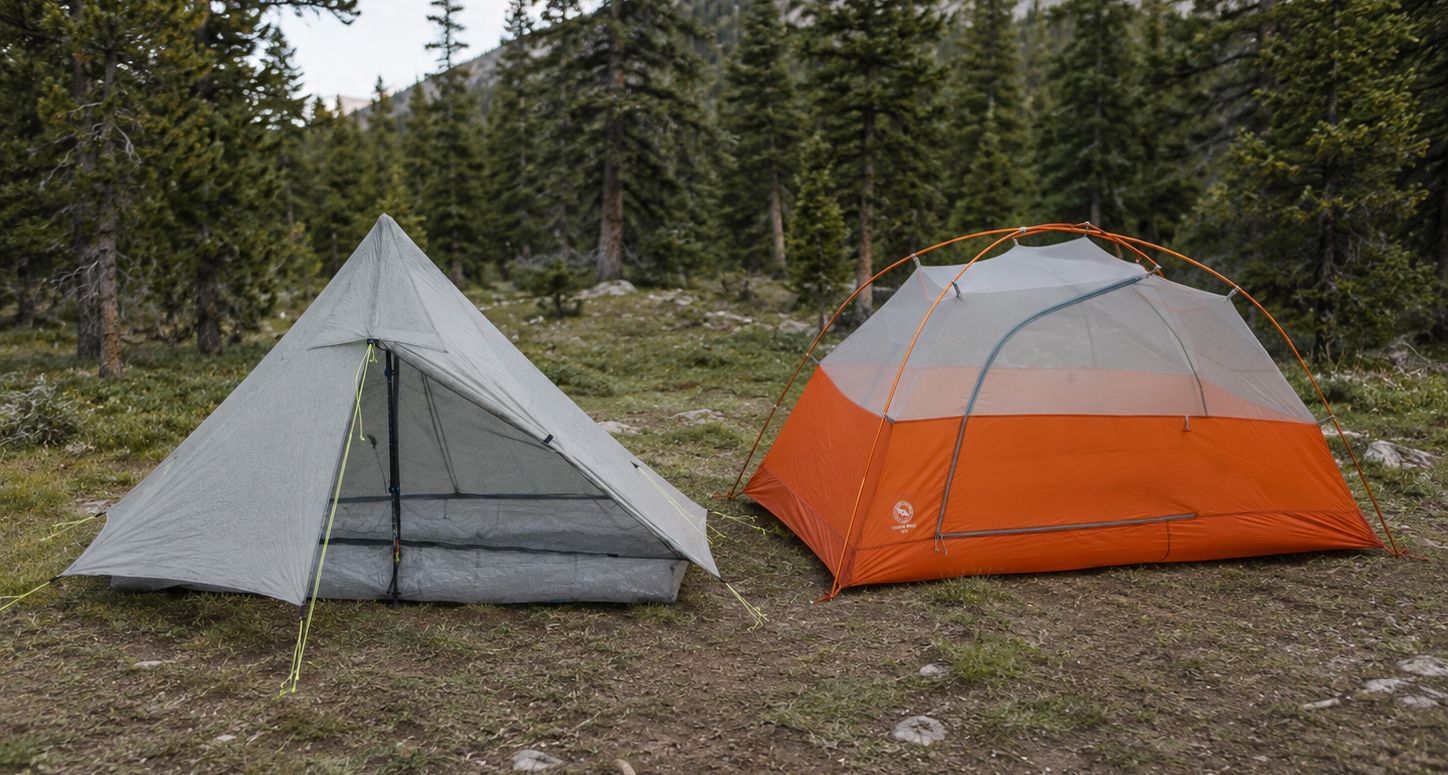
Freestanding tents use a dedicated pole structure and can be easier to move before final staking, but guylines and anchors still matter in wind. Trekking-pole tents can be very light and strong when tension, pole height, angle, and anchors are correct, but they depend more visibly on site and pitch precision.
Neither category is universally better. Compare the specific structure, complete setup, skill requirement, and expected campsites.
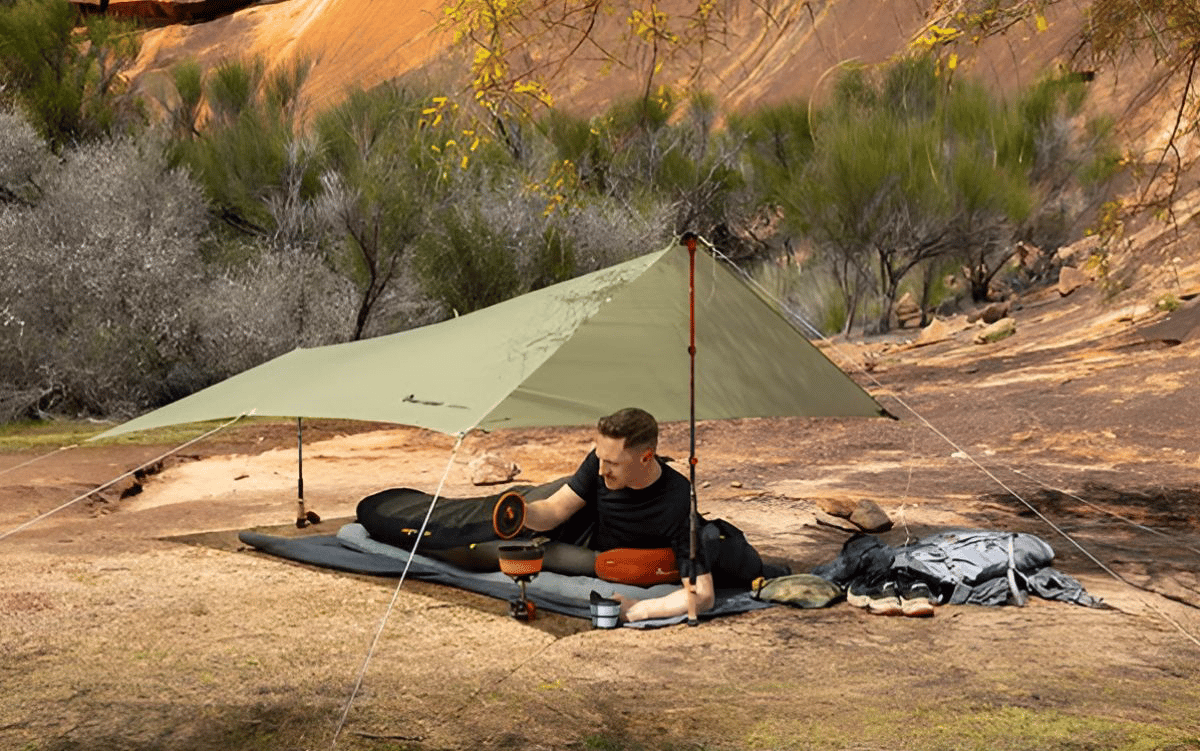
A backpacking tarp is another pitch-dependent option, but it should be evaluated by coverage, anchors, skill, bugs, and expected exposure—not weight alone.
How to Read Tent Specifications Without False Confidence
| Specification | Useful question | What it cannot prove alone |
|---|---|---|
| Season label | Is the design intended for typical 3-season or winter loads? | Suitability for a specific severe forecast |
| Hydrostatic head | How does the listed fabric resist water pressure when new? | Whole-tent leak resistance |
| Denier | How is yarn size categorized? | Overall tear, abrasion, coating, or lifespan performance |
| Minimum weight | What core components are counted? | Your complete carried weather setup |
| Pole material/diameter | What structure is provided? | Geometry, anchors, site, and wind performance |
| Guyout count | What extra support locations exist? | Whether the supplied lines and stakes suit the site |
Campsite Selection and Pitch Matter
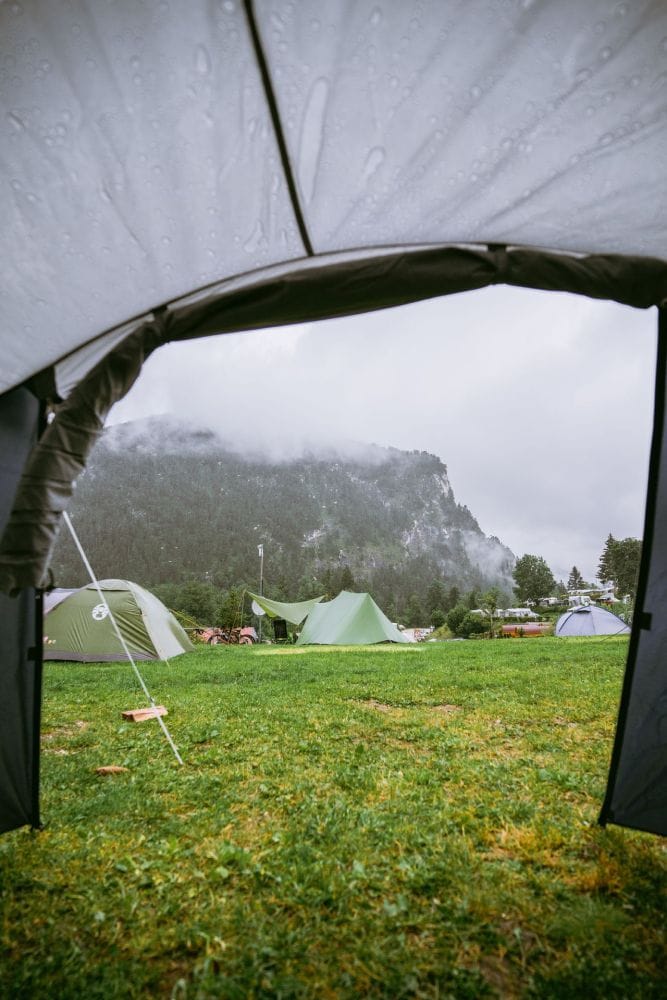
The REI tent setup guide recommends practicing at home, seeking appropriate natural protection, avoiding damaged trees, choosing higher/drier ground, orienting the shelter with its strongest structure toward wind, keeping doors away from wind-driven rain, and rechecking fly tension after fabric gets wet.
At camp:
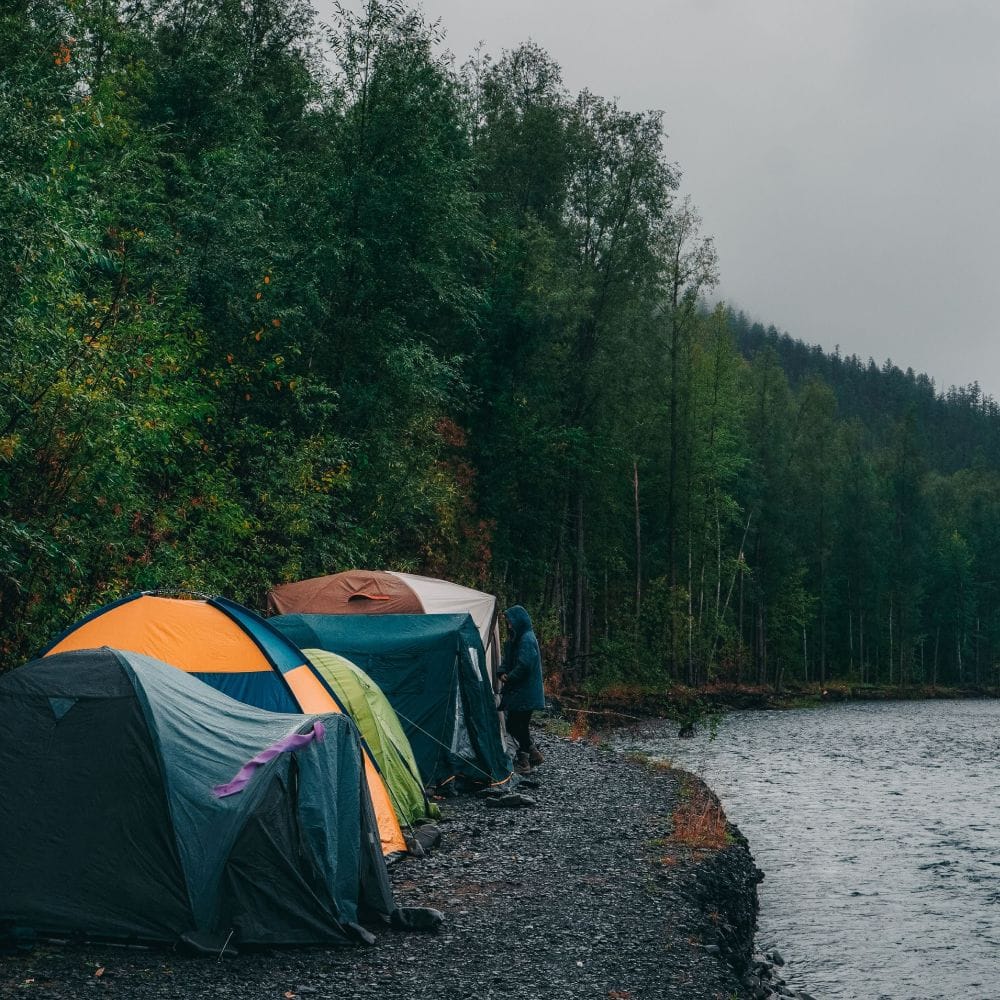
- Avoid drainage channels, depressions, loose hazards, and exposed terrain beyond the plan.
- Follow designated-site and minimum-impact rules.
- Stake the shelter before it can become airborne.
- Install the fly attachments and guylines specified for weather.
- Tension evenly and keep fly/body separation.
- Recheck anchors and wet-fabric tension before sleeping.
- Keep ventilation open as safely as conditions allow.
The Big Agnes tent tips similarly emphasize taut pitch, guylines, separation, and ventilation.
Rain-and-Wind Selection Checklist
- What is the realistic forecast and exposure?
- Is a 3-season shelter appropriate at all?
- Does the full fly protect doors and inner walls?
- Can vents work during rain?
- Are seams factory sealed, taped, or user sealed as required?
- Is the complete pole, stake, and guyline setup included in carried weight?
- Can the shelter fit protected sites on the route?
- Have you pitched it correctly before the trip?
- Do you have a route change or bailout plan?
FAQ
What waterproof rating should a backpacking tent have?
There is no single rating that guarantees a dry tent. Use hydrostatic head to compare listed fabrics, then evaluate coatings, seams, doors, floor, fly coverage, pitch, aging, and intended conditions.
Does higher denier mean a better storm tent?
No. Denier is one material descriptor. Structure, coatings, seam construction, geometry, anchors, ventilation, and user setup also matter.
Are trekking-pole tents good in wind?
Some are, when the specific design is correctly oriented, tensioned, guyed, and anchored. Category alone does not establish performance.
Should all guylines be used in bad weather?
Follow the manufacturers weather setup and prioritize structural guyout points for the expected wind direction. Suitable anchors and correct tension matter as much as line count.
How should a tent face the wind?
Follow the models instructions. REI notes that the side with the strongest pole structure may be more important than simply pointing the smallest side into wind, and doors should generally avoid wind-driven rain.
Is a 3-season tent safe in every rainstorm?
No. Three-season describes an intended category, not a guarantee for severe wind, flooding, snow loading, or exposed terrain. Change the route or plan when conditions exceed shelter and experience.
Related Guides
Freestanding vs Trekking Pole Tents: Which Should You Choose?
Decide between freestanding and trekking pole backpacking tents by setup style, campsite surfaces, weather, weight, and comfort.
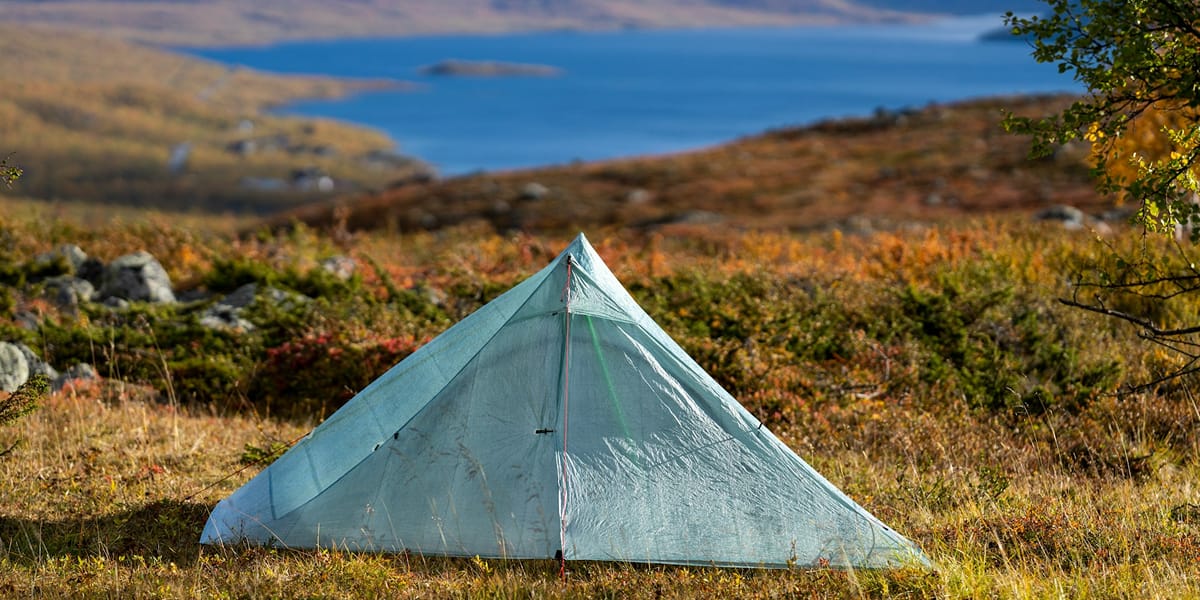
How Much Should a Backpacking Tent Weigh?
Understand backpacking tent weight ranges, packed weight vs trail weight, and when a heavier shelter is worth carrying.
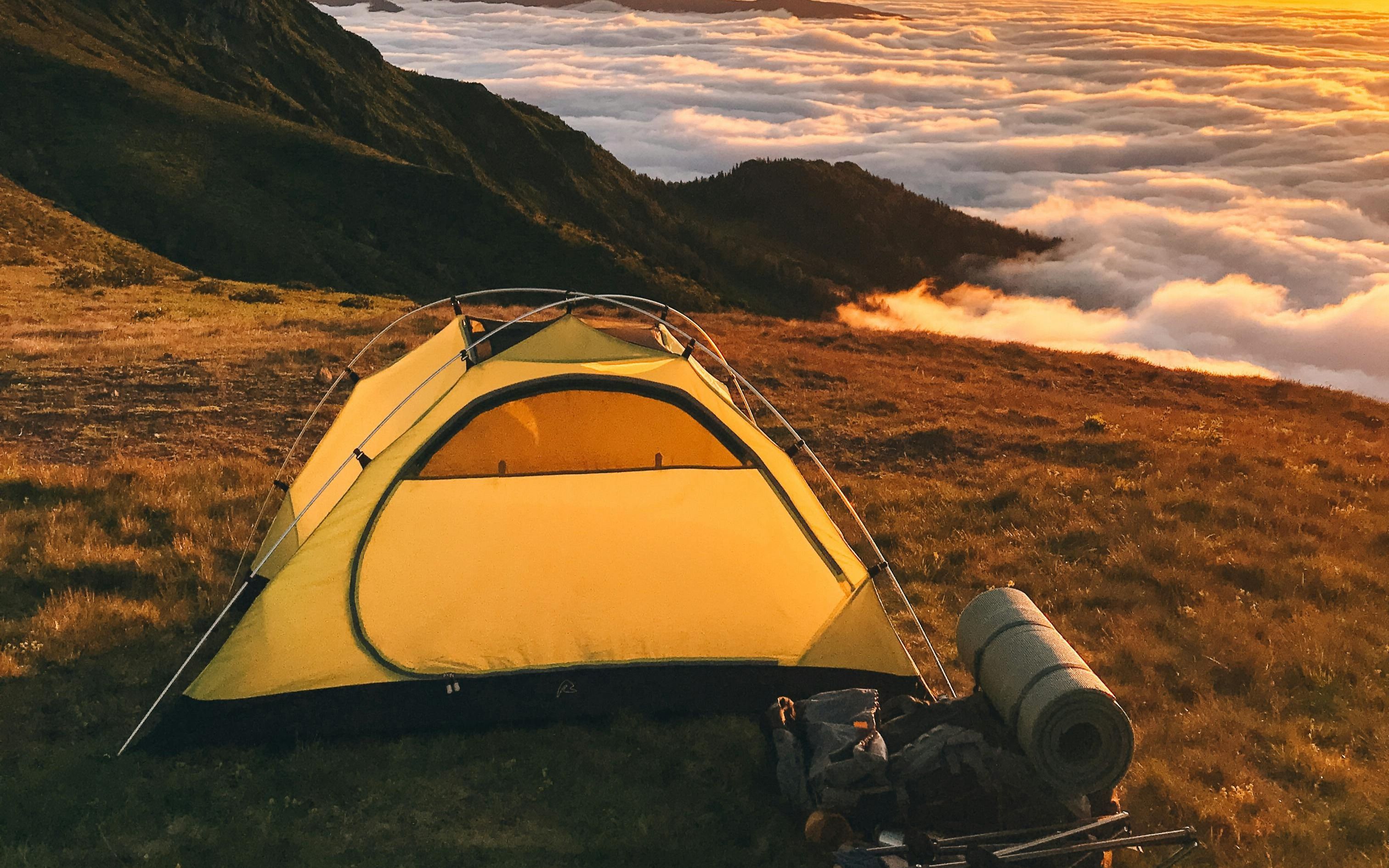
Best Backpacking Tents Of 2026
Compare backpacking tents for solo and two-person trips by weight, livable space, packed dimensions, setup style, pole system, ventilation, and weather protection.
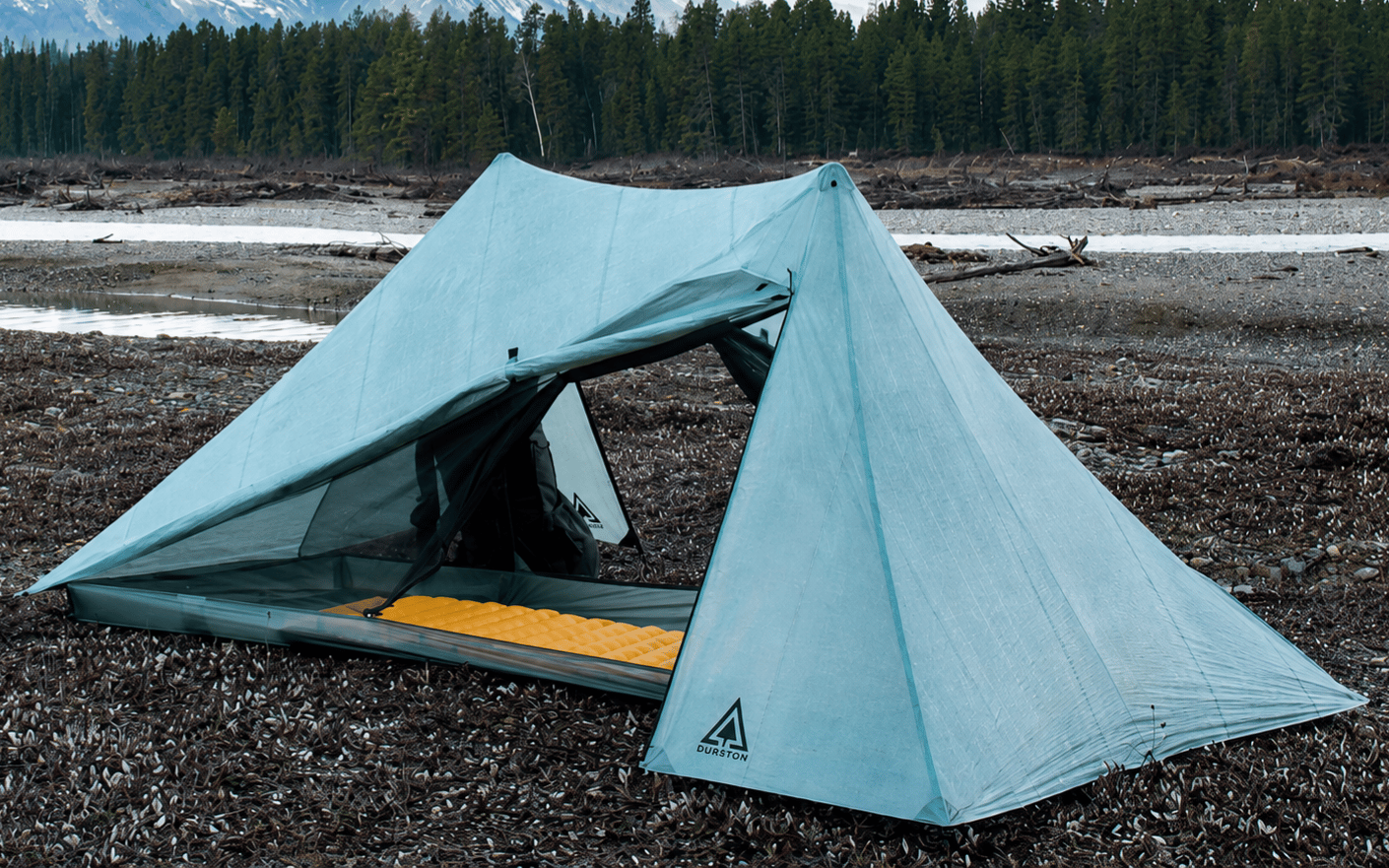
Best Ultralight Backpacking Tents
Compare ultralight backpacking tents for thru-hiking, solo trips, livable two-person space, trekking-pole setup, weather protection, and packed weight.
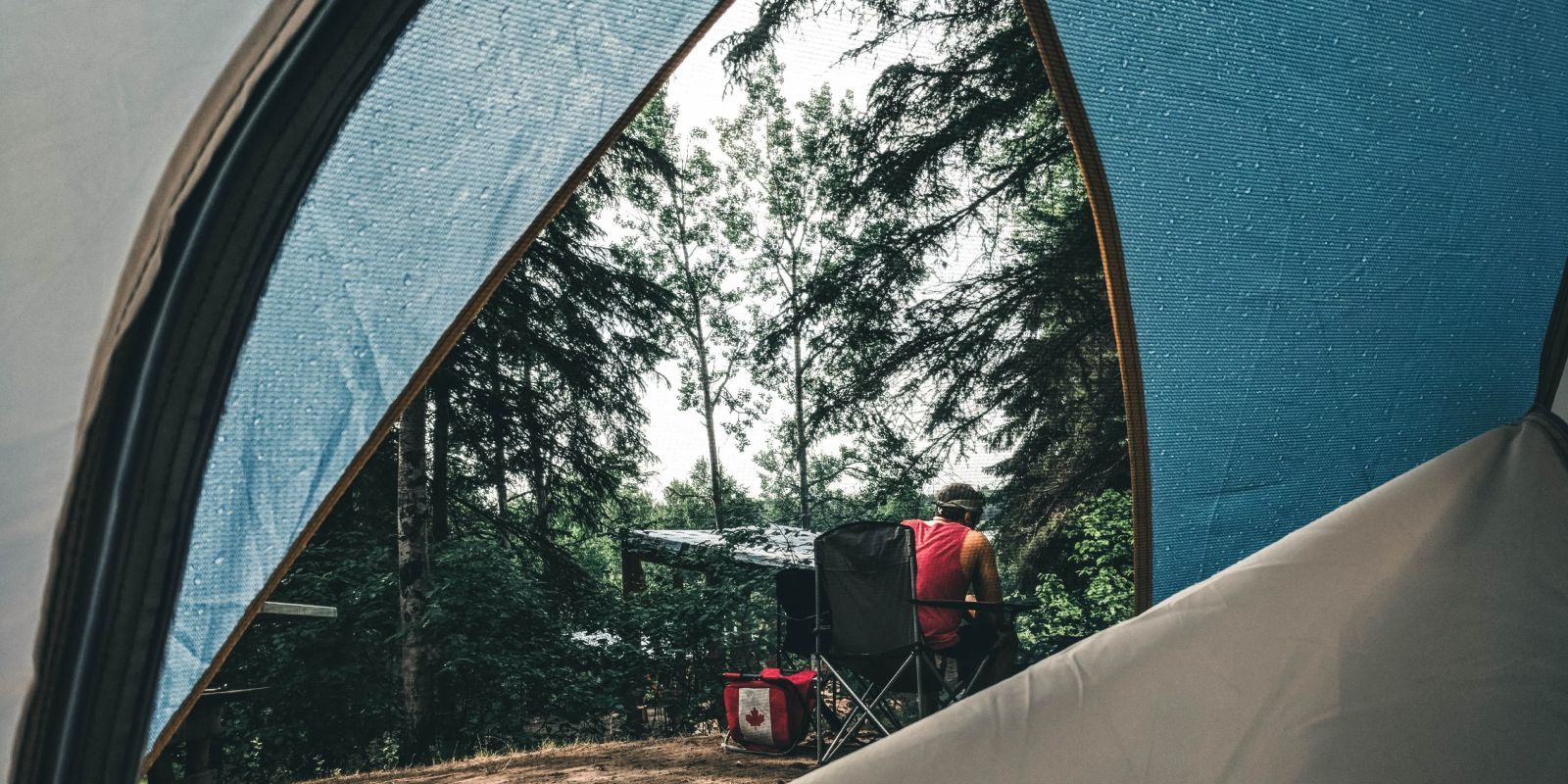
How to Prevent Condensation in a Backpacking Tent
Learn why tent condensation forms, how to distinguish it from a leak, and which ventilation, campsite, pitch, and drying choices reduce moisture.
Best Backpacking Tarps
This guide compares the best backpacking tarps, highlighting top options for durability, weather resistance, and lightweight design to help you choose the right shelter for your adventures.