
Minimalist Backpacking Gear List for Weekend Trips
Pack a complete minimalist backpacking kit by covering every essential system, removing accidental redundancy, and adding route-specific gear back when needed.
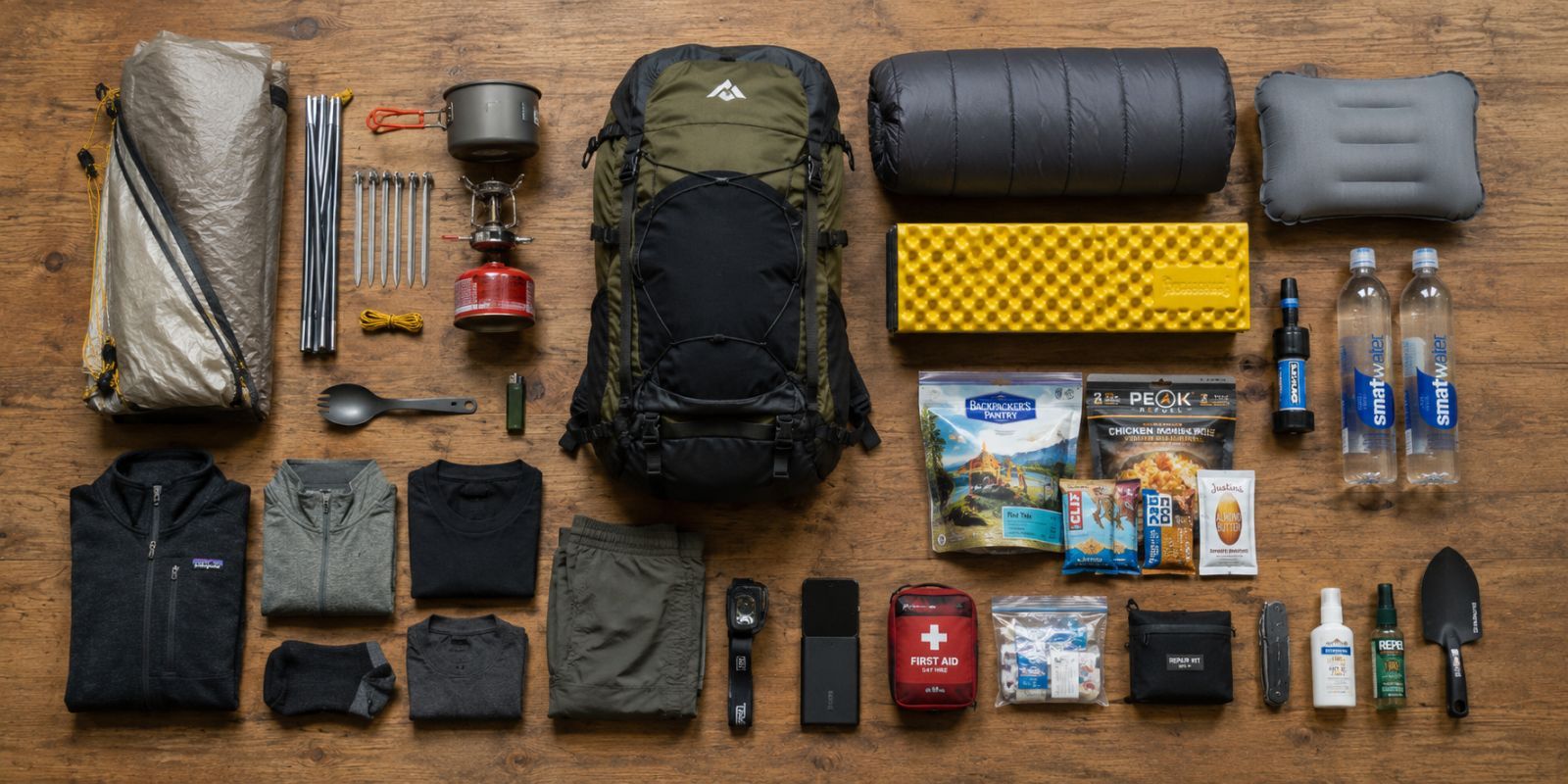
Draft status: Step 9 completed on 2026-07-21. This is article prose only, not the final structured blog object. Local rules and live guide links require verification during object construction.
A minimalist backpacking gear list covers every required system with the fewest deliberate items: pack, shelter, sleep, clothing, food, water, navigation, lighting, first aid, repair, hygiene, and emergency protection. Remove duplicates and unnecessary packaging, but add gear back whenever weather, terrain, water, food-storage rules, remoteness, or personal needs require it.
Minimalist backpacking is not the same as carrying an incomplete kit. The goal is to reduce complexity and accidental redundancy while preserving a complete plan for the trip. An item can be unused and still essential; a headlamp or first-aid item does not become unnecessary because the trip went well.
The NPS Ten Essentials and REI backpacking checklist are useful system checks. They should be tailored to the route, not copied as one rigid pile.
What Is a Minimalist Backpacking Gear List?
A minimalist list gives each item a defined job and limits overlap. It asks three questions:
- What problem does this item solve on this trip?
- Is another item already solving the same problem?
- What happens if this item fails or conditions change?
Minimalist and ultralight often overlap, but the emphasis differs. Minimalism prioritizes simplicity and controlled redundancy; ultralight focuses more directly on total weight. A simple kit can still be heavier because it favors durable or familiar equipment.
Minimalist Backpacking Checklist
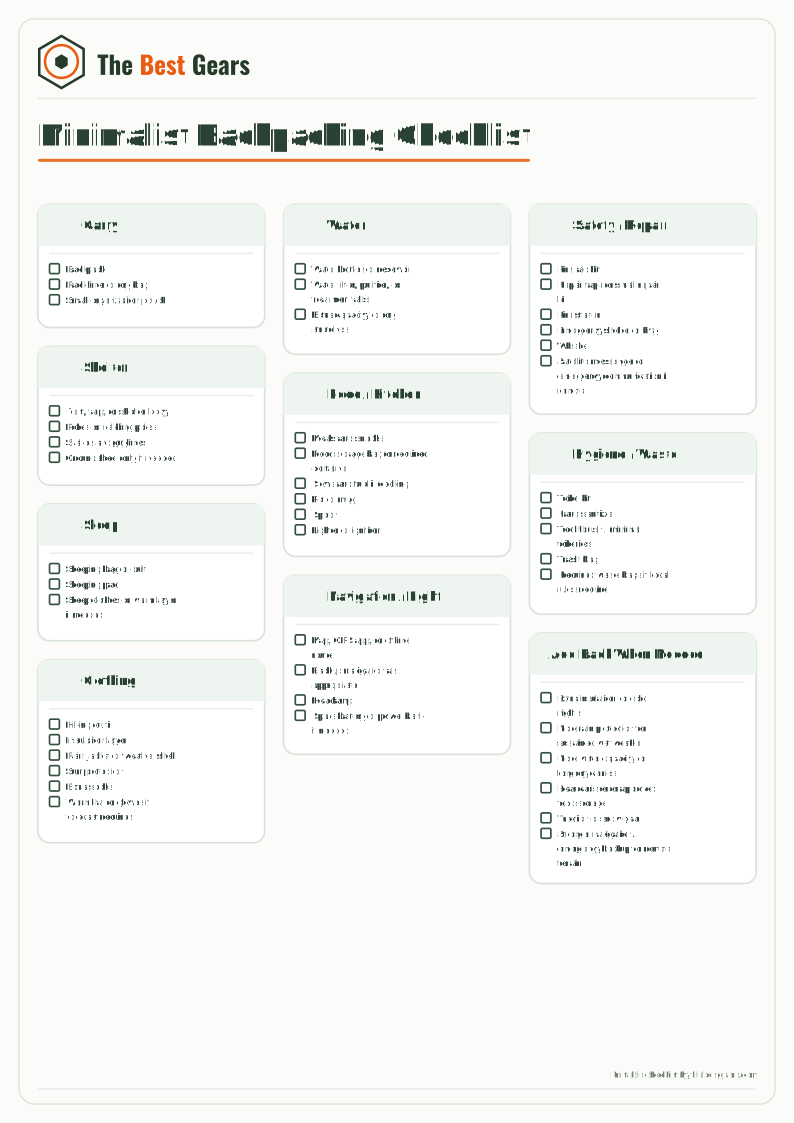
| System | Pack | Quantity logic | Shareable? | Add more when |
|---|---|---|---|---|
| Carry | Fitted backpack, liner or dry protection | Size follows actual gear and food volume | No | Required food storage or long carries add bulk |
| Shelter | Complete tent, tarp, or other suitable shelter | Include required stakes, poles, and guylines | Often | Group size, insects, rain, wind, or privacy needs change |
| Sleep | Bag or quilt, pad, sleep clothing if needed | Match expected lows and sleeper | Usually no | Cold, wet, or shoulder-season conditions require margin |
| Clothing | Hiking outfit, insulation, rain/sun layers, socks | Build one coordinated system | No | Forecast, exposure, or lack of bailout requires more |
| Water | Carrying capacity and treatment | Plan from reliable sources and longest dry section | Sometimes | Heat, terrain, source uncertainty, or group needs increase capacity |
| Food/kitchen | Food, storage, stove/fuel if used, one eating vessel | Plan meals first | Often | Regulations, group cooking, or cold conditions change the system |
| Navigation/light | Map or offline route, backup as appropriate, headlamp | Size power for navigation dependence | No | Remote or complex routes need stronger backup |
| Safety/repair | First aid, repair, fire, emergency shelter, communication as appropriate | Customize for people and route | Some | Remoteness and consequences increase redundancy |
| Hygiene/waste | Toilet kit, hand cleaning, required waste system | Follow land-manager rules | Some | Local pack-out requirements apply |
For a fixed itinerary, the 3-day backpacking packing list adds duration-specific quantities; meal choices can then be narrowed with the backpacking food guide.
What Can You Usually Leave at Home?
Start with items that duplicate an existing function.
- Multiple full outfits for a short trip.
- Separate bowls, plates, and mugs when one vessel works.
- Full-size toiletries and product packaging.
- Large knives, hatchets, or heavy tools without a route-specific job.
- Multiple power cables or entertainment devices.
- Extra stuff sacks that do not protect food or critical dry gear.
- “Just in case” gadgets that do not answer a defined risk.
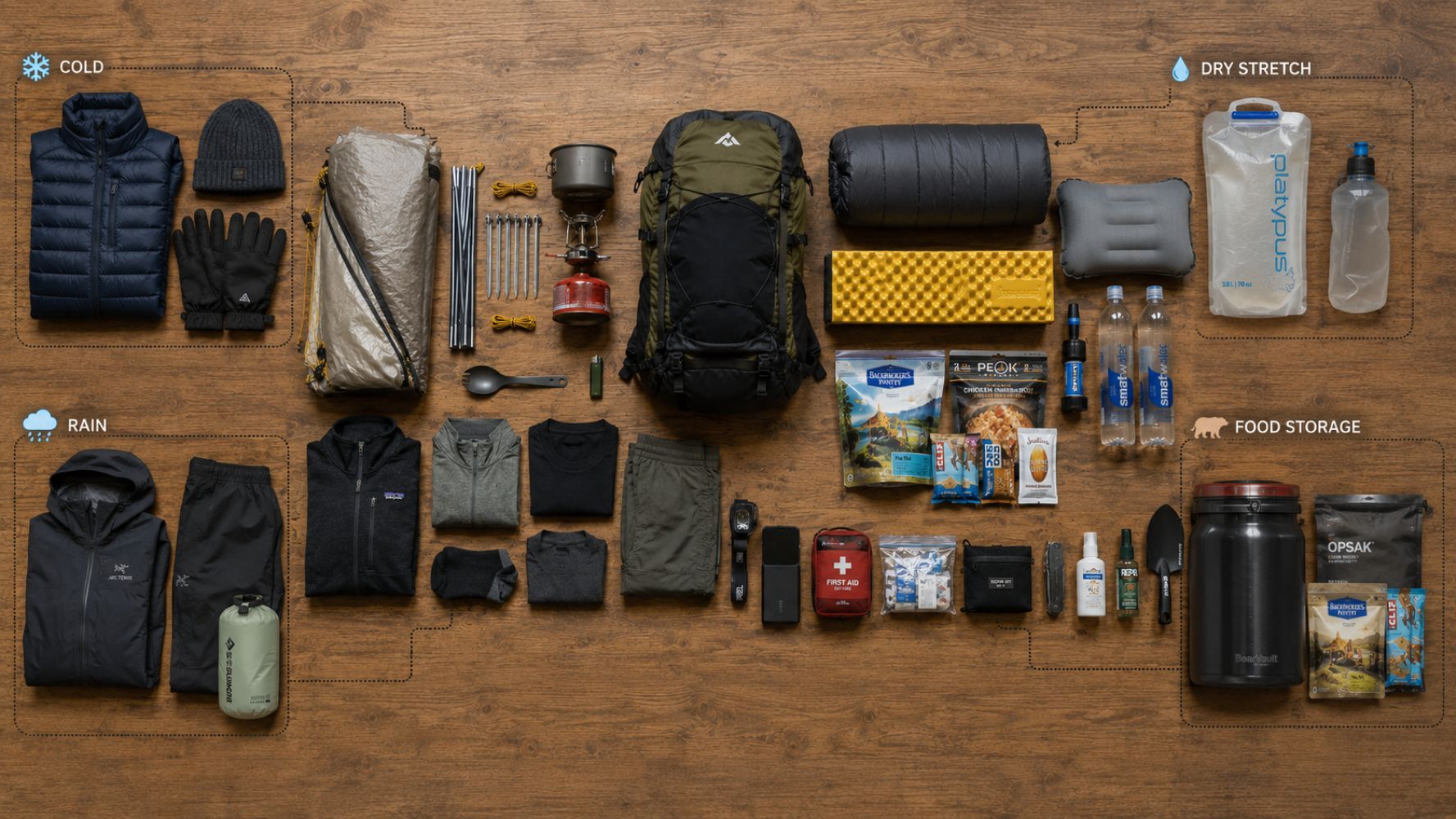
Do not use this list mechanically. A second ignition method, backup water treatment, paper navigation, or extra insulation may be deliberate risk control rather than clutter.
When Should You Add Gear Back?
| Condition | Add or change | Why | Verify with |
|---|---|---|---|
| Colder overnight low | More sleep insulation or warmer pad | Resting and ground contact change warmth needs | Forecast and product ratings |
| Sustained rain or exposure | More robust weather protection and dry storage | Wet insulation can become ineffective | Forecast and route exposure |
| Long dry carry | More water capacity | Treatment does not help between absent sources | Current water reports and map |
| Bear-resistant storage requirement | Approved container or required system | Local rules override generic packing advice | Land manager |
| Remote or technical route | More navigation, repair, communication, or emergency margin | Consequences and bailout time increase | Route plan and local guidance |
| Group trip | Deliberately assigned shared gear | Sharing saves weight only if responsibility is clear | Written group checklist |
Share Group Gear Deliberately
Shared gear is one of the cleanest ways to simplify a group load, but only when ownership is explicit. Assign the shelter body, poles, stakes, stove, fuel, water treatment, repair kit, and required food storage before packing.
Each person should still carry what they need if temporarily separated, including personal insulation, water capacity, essential medication, light, and navigation appropriate to the trip. Minimalism should not create a single point of failure that no one recognized.
Run a Final System Check
The NPS Hike Smart guidance recommends checking route, terrain, weather, alerts, and trip-appropriate supplies. Use that sequence for the final review:
- Confirm route, forecast, water, permits, and food-storage rules.
- Check that every essential system has an answer.
- Remove accidental duplicates.
- Test shelter, water treatment, stove, light, and sleep system.
- Load the pack and walk with the actual starting weight.
- Share the itinerary and emergency plan.
FAQ
What is the minimum gear needed for backpacking?
There is no universal minimum item count. A complete kit needs carry, shelter, sleep, clothing, food, water, navigation, lighting, first-aid, repair, hygiene, and emergency systems adapted to the trip.
Is minimalist backpacking the same as ultralight backpacking?
No. Minimalist backpacking emphasizes fewer, multi-purpose, deliberately chosen items. Ultralight backpacking emphasizes total carried weight. A kit can follow one approach without meeting the other.
What is the safest gear to remove first?
Remove duplicate clothing, extra cookware, full-size packaging, redundant containers, and tools without a defined job. Do not remove complete safety or weather systems.
Do multi-purpose items always save weight?
Only when they perform every required job well enough. A multi-purpose item that is awkward, unreliable, or needed in two places at once can create a new problem.
Can beginners use a minimalist list?
Yes, but beginners should test it on a low-risk overnight. Familiarity and reliable setup matter as much as item count.
How should a group divide shared gear?
Assign every shared component to a named person before departure and check that all components arrive. Keep critical personal needs with the individual who depends on them.
Related Guides
Ultralight Backpacking Checklist: What to Pack and What to Skip
Build a lighter backpacking kit with a practical checklist for essential gear, optional items, and weight-saving cuts that do not compromise safety.
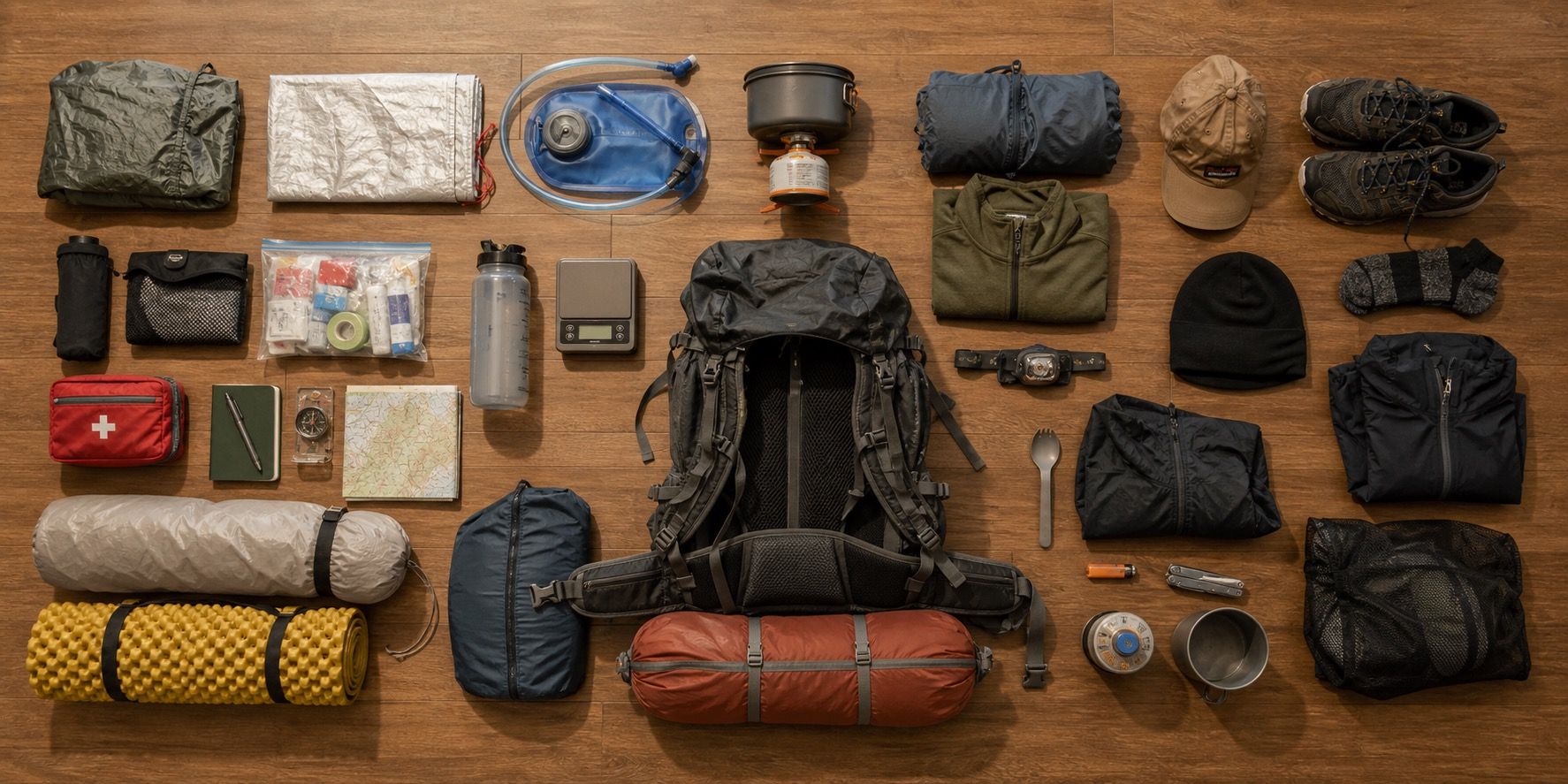
How to Reduce Backpacking Pack Weight Without Sacrificing Safety
Lower backpacking pack weight with a practical shakedown process that cuts unnecessary items before safety margin.
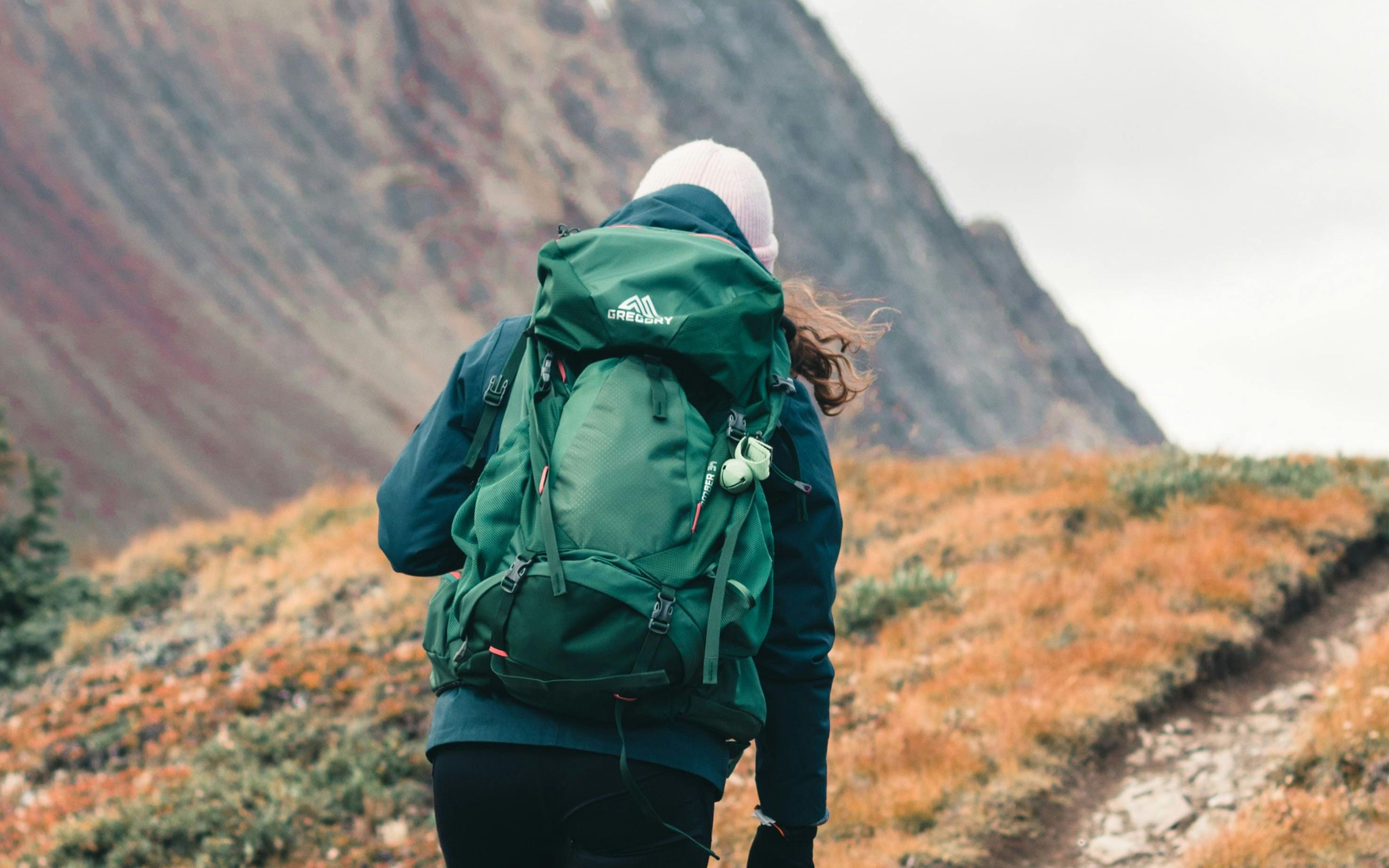
Best Backpacking Backpacks
Compare backpacking backpacks for overnight and multiday trips by capacity, fit, suspension, hipbelt comfort, ventilation, pockets, weight, and durability.
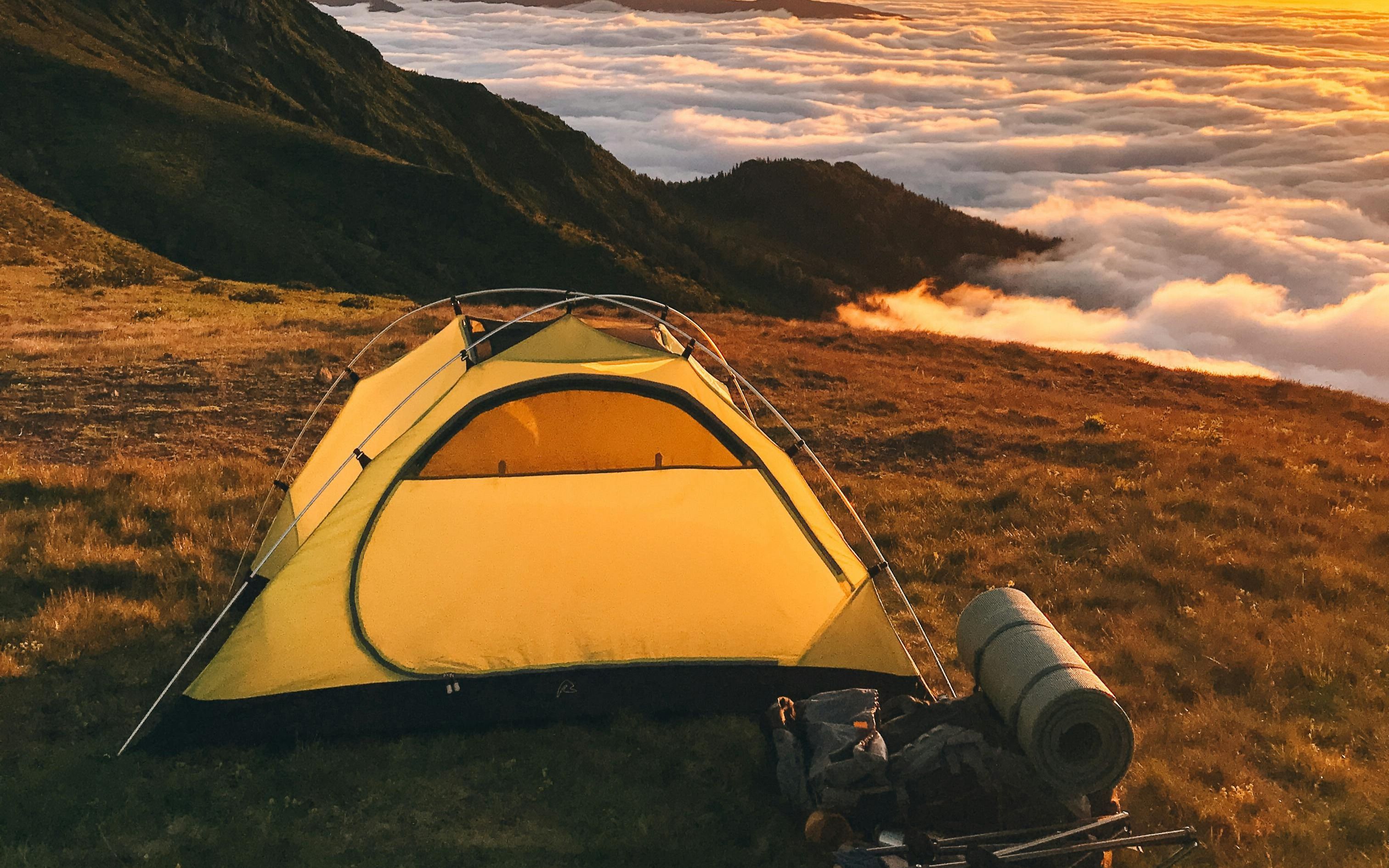
Best Backpacking Tents Of 2026
Compare backpacking tents for solo and two-person trips by weight, livable space, packed dimensions, setup style, pole system, ventilation, and weather protection.
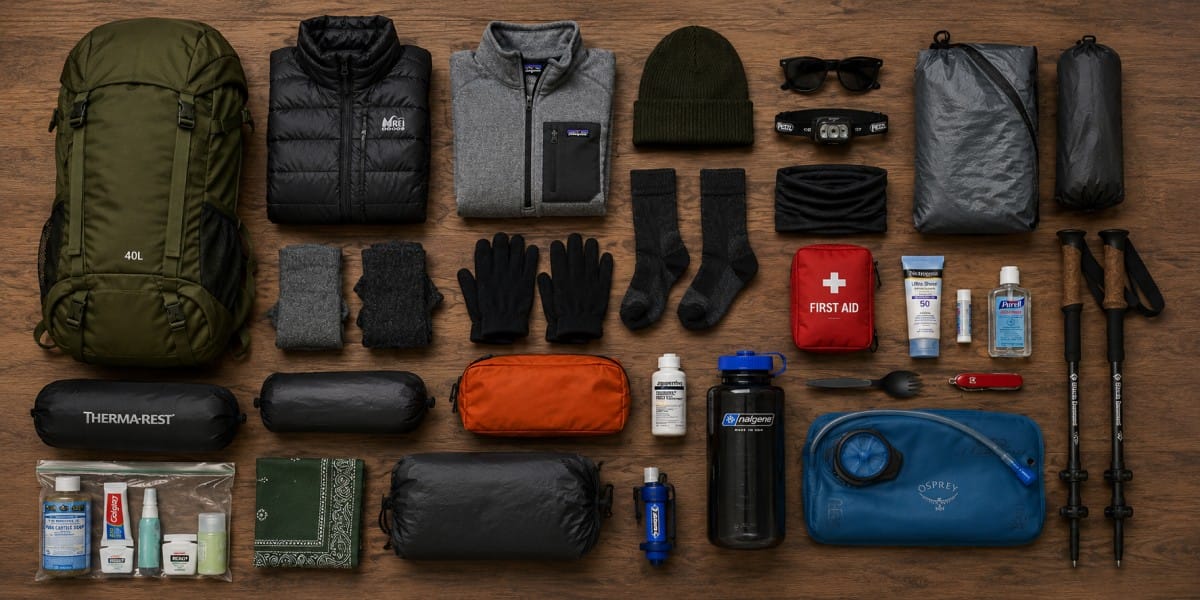
3-Day Backpacking Packing List for Beginners
Pack for a three-day backpacking trip with a beginner checklist that separates core gear from food, water, weather, and route-specific needs.
What Is the Big Three in Backpacking Gear?
Understand the backpacking Big Three—shelter, sleep system, and backpack—plus the Big Four variation, complete-weight comparisons, and upgrade order.