
Best Avalanche Beacons
Why You Can Trust Us
- Rankings based on aggregated user data, not personal bias
- Payment never guarantees inclusion
- Updated regularly as new reviews emerge
We may earn from affiliate links at no extra cost to you.
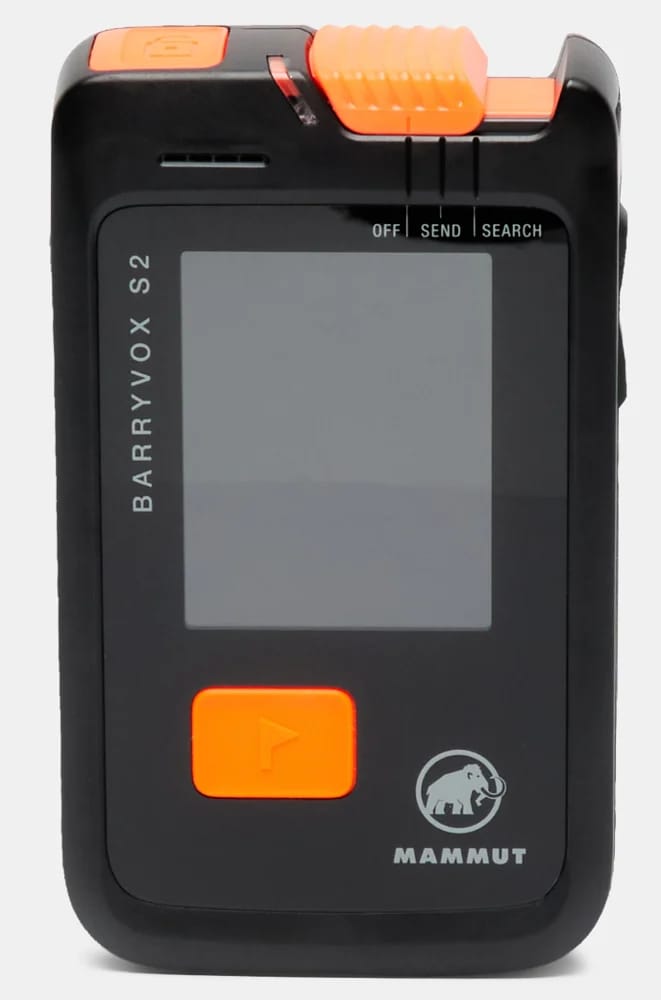
Mammut Barryvox S2
3
230 ft (70 m max range)
Yes (overview of up to 16)
6.3 oz (180 g, with batteries)
≈450 hr send (alkaline) | ≈550 hr (lithium)
2 years; 5 years with registration
3
230 ft (70 m max range)
Yes (overview of up to 16)
6.3 oz (180 g, with batteries)
≈450 hr send (alkaline) | ≈550 hr (lithium)
2 years; 5 years with registration
GOODS
- Voice prompts and a single main button keep search steps simple, even with gloves on.
- Battery life matches or beats the prior model, and overview mode shows up to 16 burials for triage.
- Screen contrast is improved for bright sunlight, and the slimmed housing is thinner and lighter to carry.
BADS
- Durability is the least settled area, so don't count on it as a standout strength; the horizontal slider lock avoids an up-and-down component that can fatigue over time.
- Covered by Mammut's 2024 voluntary recall of 2024/25-season units, where a misaligned main switch could flip SEND to SEARCH or turn the unit off, so confirm your unit was checked or repaired by Mammut
Compare this product with...
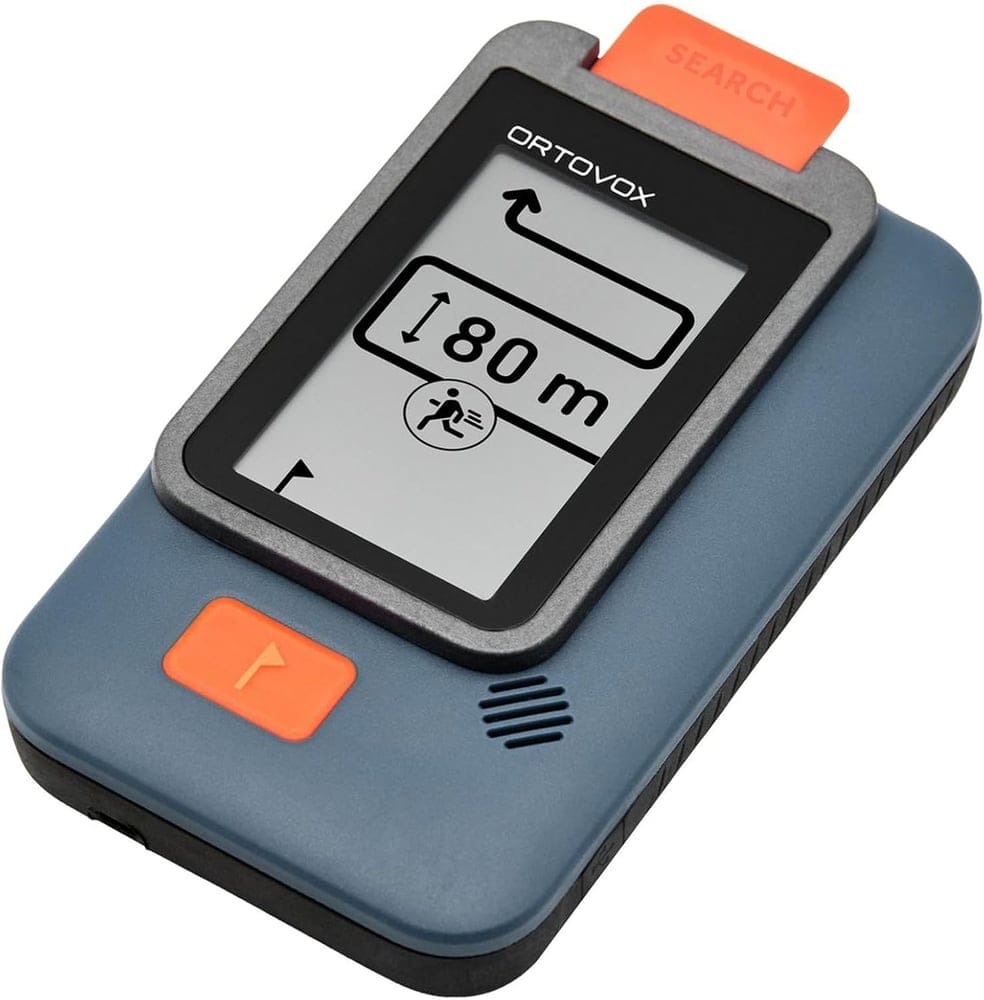
Ortovox Focus Voice
3
262 ft (80 m search strip width, ICAR)
Yes (up to 4 victims)
6.5 oz (185 g)
≈200 hr send
5 years with app registration
3
262 ft (80 m search strip width, ICAR)
Yes (up to 4 victims)
6.5 oz (185 g)
≈200 hr send
5 years with app registration
GOODS
- Voice prompts guide each search stage, so you spend less time decoding the screen.
- Antenna selection can provide up to twice the transmitting range in an unfortunate burial position.
- The 180-degree correction shows when to change direction on a high-readability display.
BADS
- Accuracy, durability, and comfort have less supporting depth than the interface and field performance.
Compare this product with...
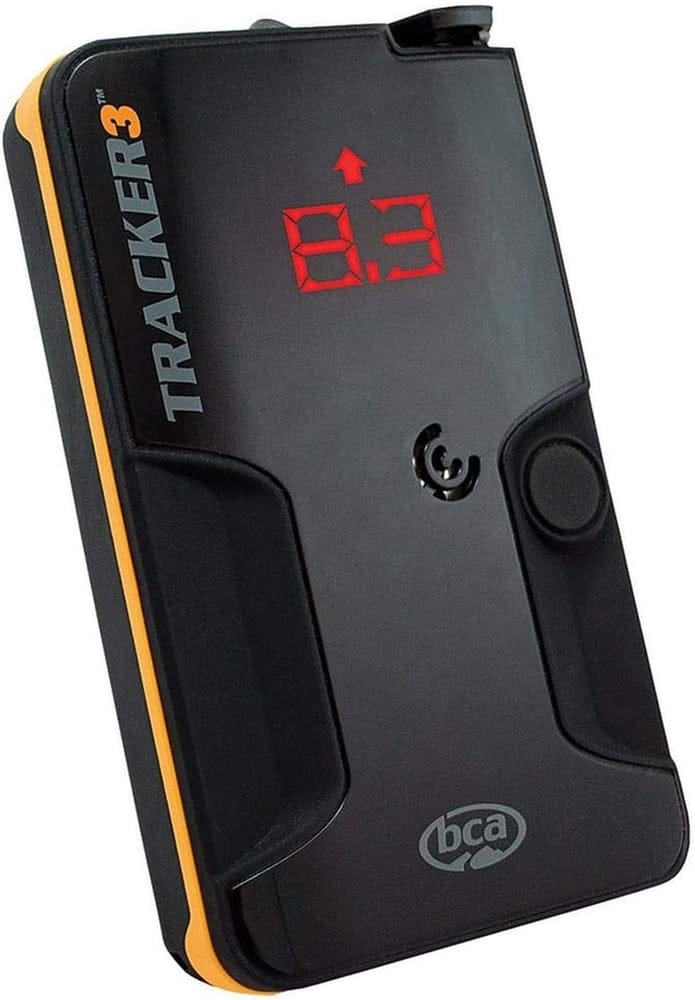
Backcountry Access Tracker 3+
3
164 ft (50 m max range)
Yes (signal suppression)
5.8 oz (164 g, without harness)
≈250 hr send | ≈50 hr search
5 years (limited)
3
164 ft (50 m max range)
Yes (signal suppression)
5.8 oz (164 g, without harness)
≈250 hr send | ≈50 hr search
5 years (limited)
GOODS
- Clear approximate distance and direction to a buried transceiver, with pinpointing lock-on to the closest unit.
- Simple operation, with a basic startup, a follow-the-arrow search process, and a quick switch back to transmit mode.
- Clear signal display, including a multiple-signal icon and bracket, Big Picture Mode for two signals at once, and audio tones that change with distance.
BADS
- Field reliability is a weak spot, with concerns about double burial indication performance.
Compare this product with...
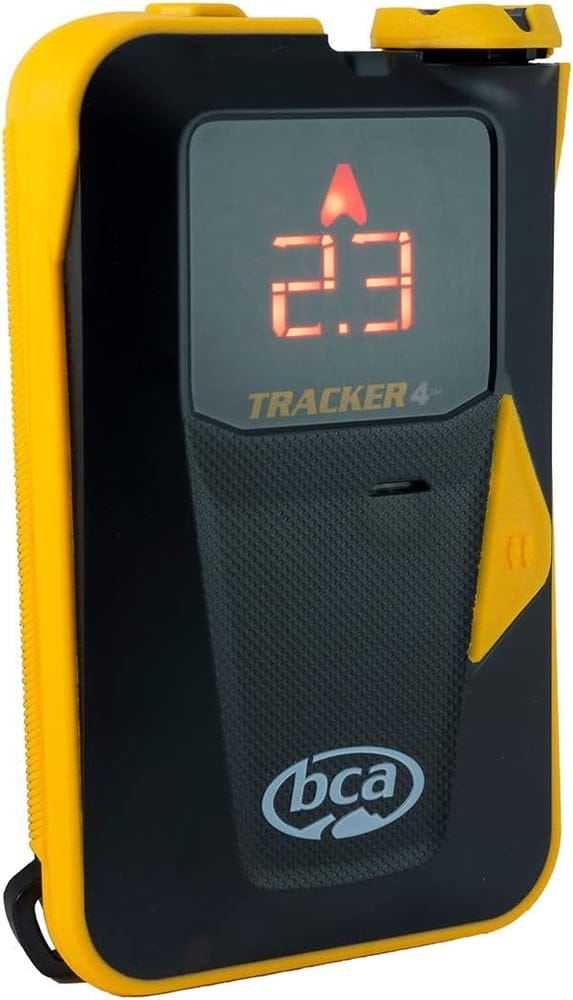
Backcountry Access Tracker 4
3
164 ft (50 m max range)
Yes (signal suppression)
6.2 oz (176 g, without harness)
≈250 hr send | ≈50 hr search
5 years (limited)
3
164 ft (50 m max range)
Yes (signal suppression)
6.2 oz (176 g, without harness)
≈250 hr send | ≈50 hr search
5 years (limited)
GOODS
- Rubberized overmold and recessed screen add durability for rough backcountry use
- Slim enough to carry in a pocket on long tours
- Larger, brighter display with a distance readout that counts down toward zero
BADS
- Locating multiple beacons in sequence after marking one has limited and split feedback
Compare this product with...
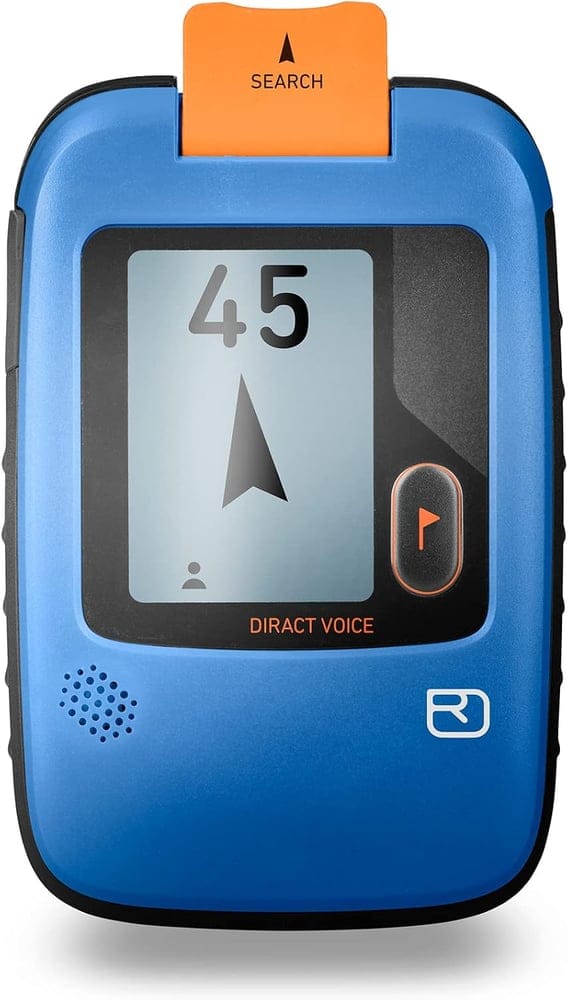
Ortovox Diract Voice
3
164 ft (50 m search strip width)
Yes (up to 4 victims)
7.4 oz
≈200 hr send + 1 hr search
5 years with registration
3
164 ft (50 m search strip width)
Yes (up to 4 victims)
7.4 oz
≈200 hr send + 1 hr search
5 years with registration
GOODS
- Intuitive straight out of the box, with simple controls, a one-hand switch to search mode, and an easy flick-tab power-on that works with gloves
- Voice prompts give clear direction and distance cues, such as run straight or bear right, so you can keep your head up during a search
- Slim, rounded body fits a ski pant pocket, and the fully adjustable harness makes it comfortable to carry on long tours
BADS
- Phones and GPS devices can interfere with it, and in multi-victim searches it can misdirect the ground prompt and overestimate distance, so cross-check results
Compare this product with...
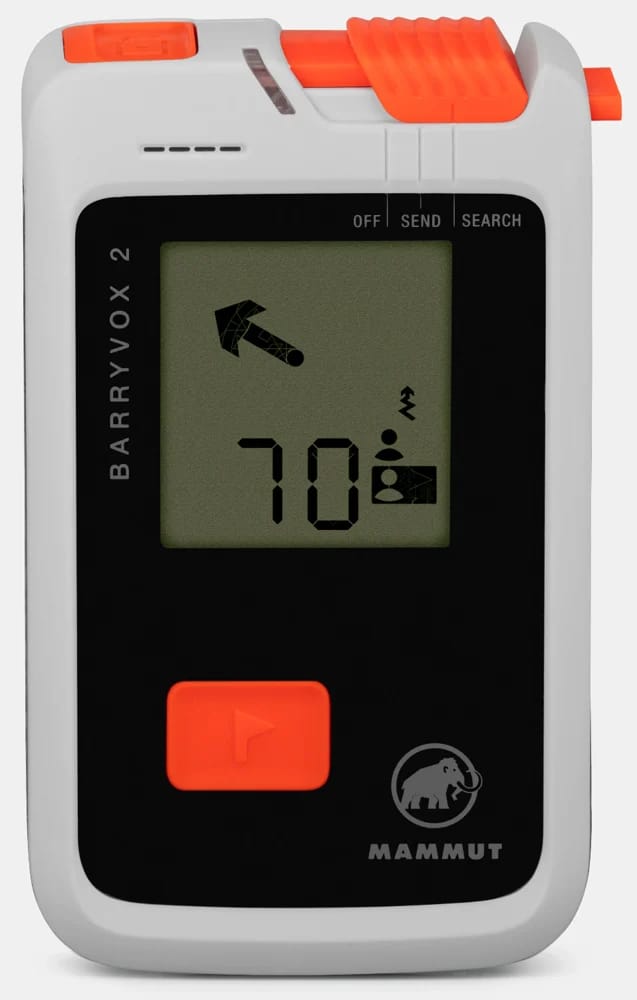
Mammut Barryvox 2
3
230 ft (70 m max range)
Yes
6.3 oz (180 g, with batteries)
≈450 hr send (alkaline)
2 years; 5 years with registration
3
230 ft (70 m max range)
Yes
6.3 oz (180 g, with batteries)
≈450 hr send (alkaline)
2 years; 5 years with registration
GOODS
- Simple on and off operation that is quick for new partners to learn and start using
- Beacon check shortens the search strip, which makes quick buddy checks faster
- Triple antenna design with a 70 m range and audio cues that guide you toward victims
BADS
- Only two batteries means less power reserve and more careful battery checks before a tour
- Covered by Mammut's 2024 voluntary recall of 2024/25-season units, where a misaligned main switch could flip SEND to SEARCH or turn the unit off, so confirm your unit was checked or repaired by Mammut
Compare this product with...
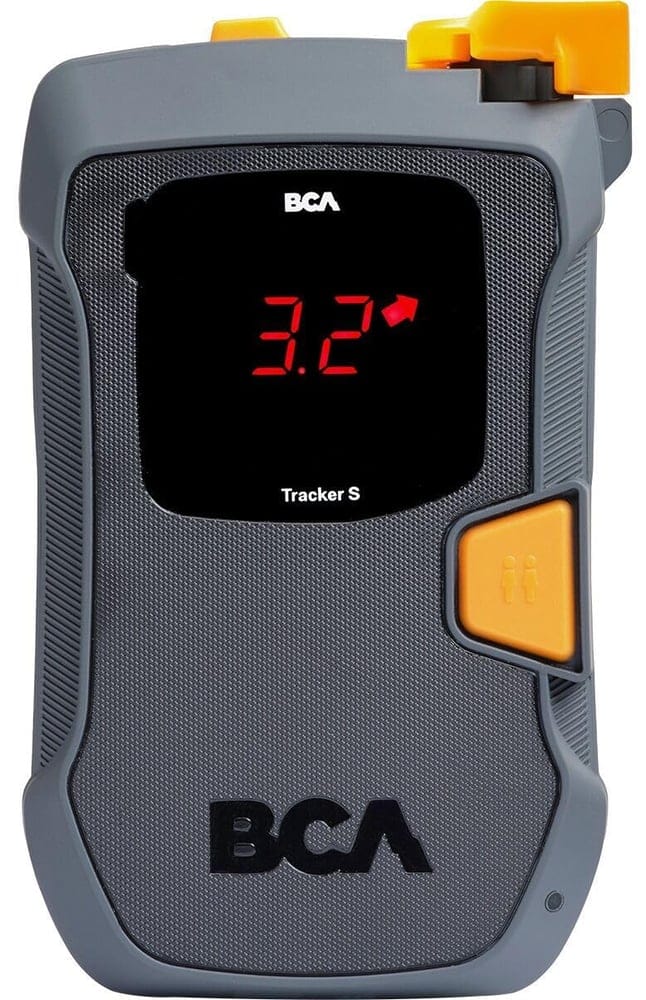
Backcountry Access Tracker S
3
164 ft (50 m max range)
Yes (signal suppression)
5.5 oz (156 g, without harness)
≈250 hr send | ≈50 hr search
5 years (limited)
3
164 ft (50 m max range)
Yes (signal suppression)
5.5 oz (156 g, without harness)
≈250 hr send | ≈50 hr search
5 years (limited)
GOODS
- Intuitive, no-frills interface that is easy for beginners to learn
- Compact, lightweight design that does not feel bulky in a pack
- Performs reliably in field use overall
BADS
- Signal readings can fluctuate in challenging terrain, and it leaves out the motion-sensing auto revert found on the Tracker 3+ and Tracker 4
Compare this product with...
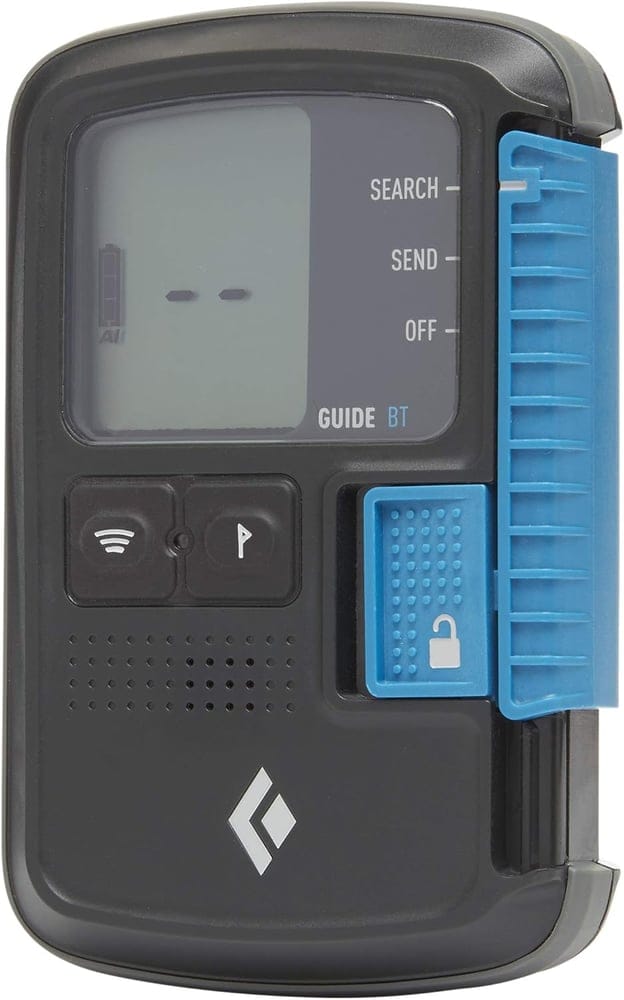
Black Diamond Guide BT
3
197 ft (60 m max range)
Yes
7.9 oz (225 g, with batteries)
≈400 hr send (alkaline) | ≈600 hr (lithium)
2 years; 5 years with registration
3
197 ft (60 m max range)
Yes
7.9 oz (225 g, with batteries)
≈400 hr send (alkaline) | ≈600 hr (lithium)
2 years; 5 years with registration
GOODS
- App-based settings are very easy to adjust, and the Fleet manager app is really good, with Bluetooth app updates for the beacon hardware.
- Directional arrow guidance and a mark function help you follow direction and flag a transceiver location during a search.
BADS
- Included in the 2022 CPSC recall of Black Diamond and PIEPS beacons because some units could not switch from SEND to SEARCH, so confirm any unit, especially a used one, was inspected or replaced under the recall
- Scan mode's wider tolerance can shorten effective range, so expect a tradeoff between broad detection and maximum distance.
- Analog mode is advanced and takes practice to master, so plan training time before relying on it on a tour.
Compare this product with...
PIEPS Pro IPS
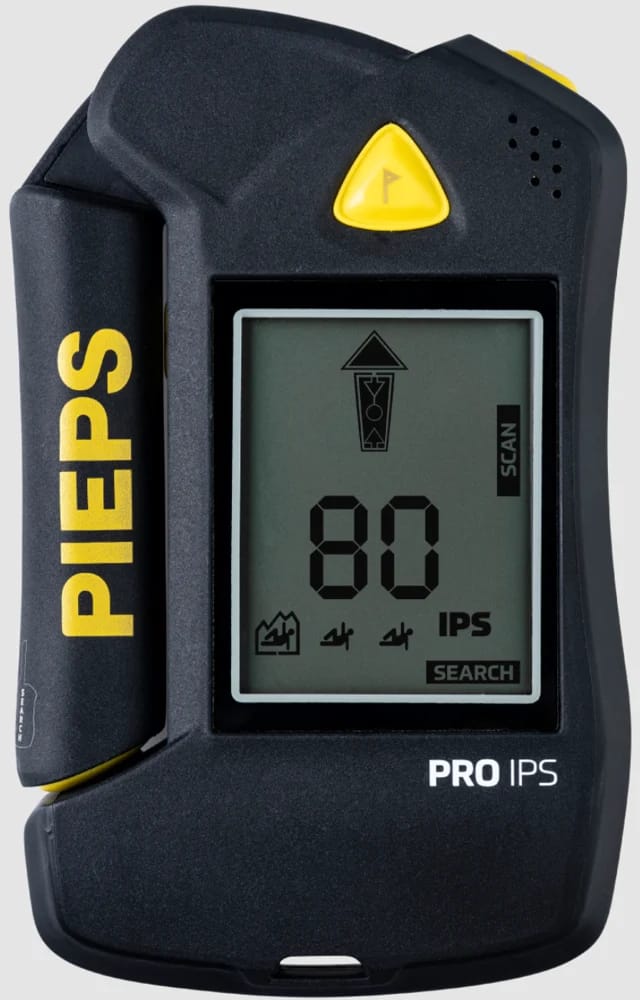
3
230 ft (70 m max range)
Yes
7.5 oz (212 g, with batteries)
≥600 hr send (alkaline) | ≥800 hr (lithium)
2 years; 5 years with app registration
3
230 ft (70 m max range)
Yes
7.5 oz (212 g, with batteries)
≥600 hr send (alkaline) | ≥800 hr (lithium)
2 years; 5 years with app registration
GOODS
- Field reliability is a strong point, with a locking-on experience and range that feels noticeably longer in the field.
- Signal clarity helps it pick up interfered transceivers earlier and amplifies its transmit signal above interference.
BADS
- The button layout can be unclear, and pressing buttons sometimes does nothing, so the manual is worth reading before a tour.
- The distance readout can overstate how far away a transmitter is, with one reading of 61 m against about 40 m actual, although it still guides you directly to the buried signal.
Compare this product with...
Trust & Transparency
- Data-driven rankings from real user reviews
- Affiliate partnerships don't influence our methodology
We may earn commission from links.
Conclusion & Final Verdict:
Barryvox S2 is the strongest all-round choice at 4.1/5, with the highest field reliability rating (4.4), a share of the top signal clarity rating (4.4), and 4.3 for ease of use. Its durability (3.3) is the least settled area, and any unit should be confirmed as checked or repaired under Mammut's November 2024 recall. Focus Voice (4.0) is the pick for spoken step-by-step guidance, backed by 4.3 ratings for ease of use and field reliability. Tracker 3+ (3.7) has the clearest signal display and simple follow-the-arrow searching, but its double-burial feedback is mixed.
Tracker 4 (3.6) is the durability pick at 4.3/5, thanks to its rubberized overmold and recessed screen. Diract Voice (3.6) suits newer partners who want voice prompts and a slim body, as long as phones and GPS devices stay away from it during a search. Barryvox 2 (3.5) is simple to teach but falls under the same 2024 Mammut recall. Tracker S (3.4) is the lightest beacon here at 5.5 oz and keeps controls simple for beginners. Guide BT (3.4) needs a 2022 recall check and practice time for its analog mode, and Pro IPS (3.3) rates well for field reliability (4.3) but has the weakest ease of use in the guide (2.3). Whichever beacon you carry, run a mode check before every tour and practice searches with your partners.
Related Guides
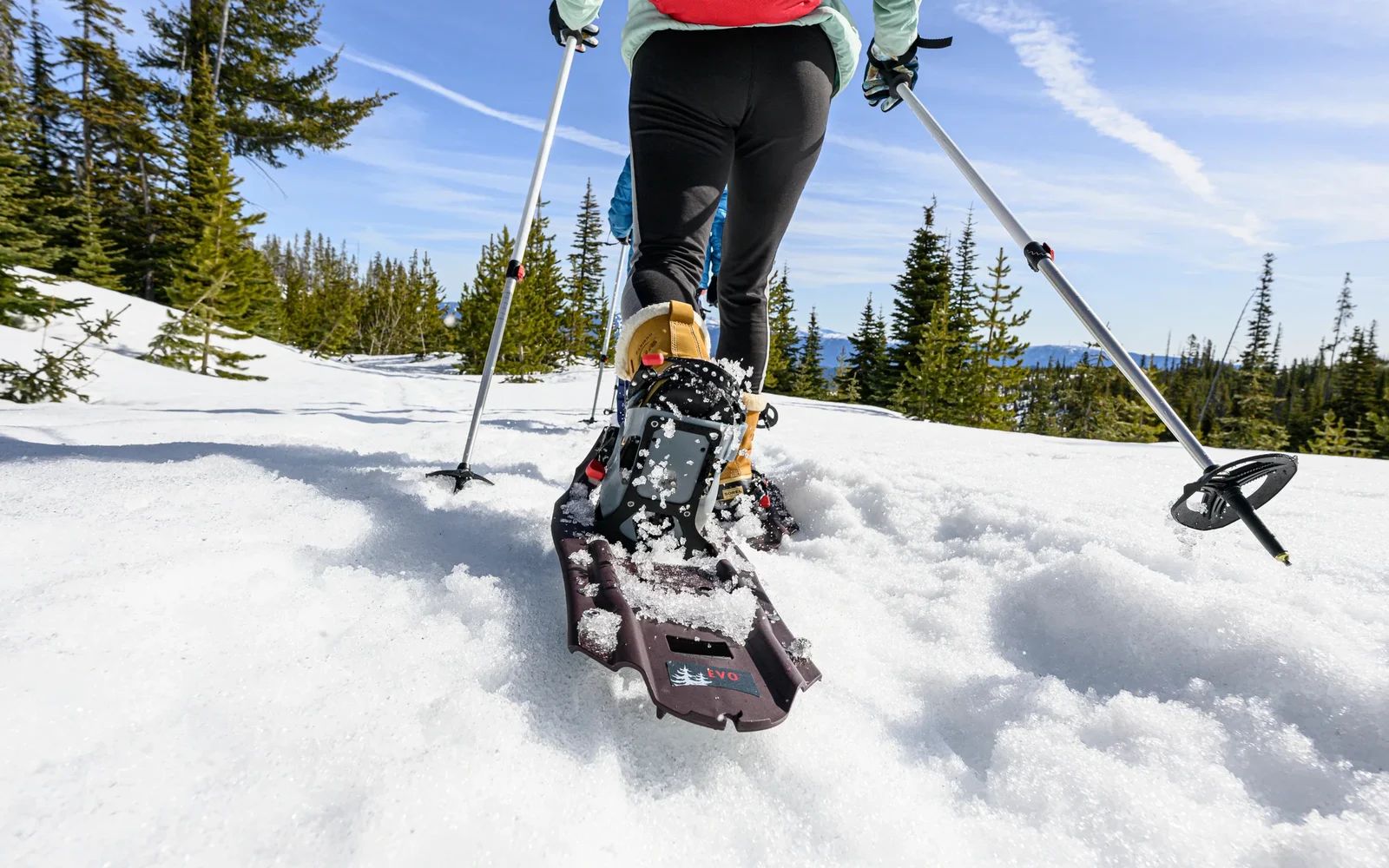
Best Snowshoes
This guide compares popular snowshoes across traction, comfort, flotation, and ease of use so you can choose a pair for icy climbs, deep powder, or long winter walks. It shows where each model excels and where it falls short.

Best Down Jackets For Hiking
Compare hiking down jackets for cold weather, winter trips, ultralight packing, alpine use, durable shells, packability, and warmth-to-weight balance.

Best Base Layers For Hiking
Compare hiking base layers for cold weather, high-output climbs, lighter merino comfort, synthetic drying, sun-ready coverage, and layering fit.
Compare These Products
Explore side-by-side matchups to find the right fit for you.
Compare other products
How We Rated These Products
Pinpoints buried transceivers precisely during searches, including multi-victim scenarios.
Withstands rough handling, drops, and impacts over years of backcountry use.
Operates intuitively with simple controls, especially under the stress of a real search.
Keeps working consistently across cold, wet, and long-duration backcountry trips.
Delivers clear, unbroken signal reception and transmission in noisy field conditions.
Feels comfortable to wear and carry during long tours.